Sixty-Two Used to Be a Finish Line. Now It's Just Another Tuesday at the Office.
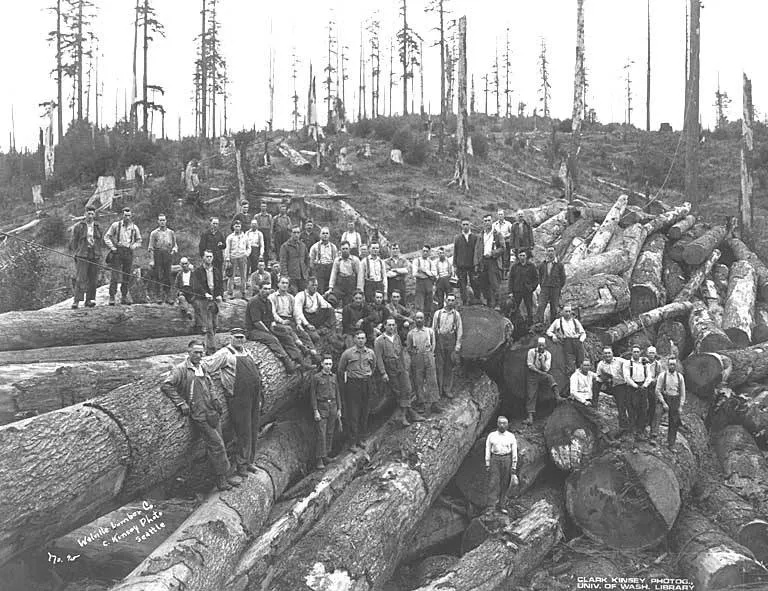
Photo: Clark Kinsey, Public domain, via Wikimedia Commons
The Gold Watch Wasn't a Joke
For a long stretch of the twentieth century, the retirement party was a real event with a real timeline behind it. Somewhere in your early sixties, if you'd worked steadily for a decent employer, you handed over your badge, accepted the handshake and the engraved watch, and walked into a life you'd actually planned for.
This wasn't a fantasy for the wealthy. It was the lived experience of truck drivers, schoolteachers, factory workers, and mid-level managers across the country. Retiring at 62 — or even earlier — wasn't remarkable. It was expected. It was, for many families, the whole point of decades of steady work.
Something happened to that expectation. It didn't vanish in a single dramatic moment. It eroded, quietly and structurally, until the idea of retiring before 65 became something between a luxury and a punchline.
What Actually Made It Possible Back Then
To understand what changed, it helps to understand what made early retirement genuinely achievable for ordinary Americans in the first place. Three things worked together in a way they simply no longer do.
Pensions were the foundation. The defined-benefit pension — where an employer commits to paying a fixed monthly amount for the rest of your life after retirement — was once the standard offering for workers in government, manufacturing, utilities, and many large private companies. You didn't manage the investment. You didn't worry about market timing. You worked your years, and the income followed you into retirement, guaranteed, until you died. For someone retiring at 62 after 30 years with a company, that monthly check could cover a significant portion of living expenses without touching savings.
At their peak in the late 1970s, roughly 38 percent of private-sector workers participated in a defined-benefit pension plan. By the early 2020s, that number had fallen to around 15 percent — and most of those remaining plans belong to public-sector workers. The private pension didn't disappear cleanly. It was gradually replaced, starting in the 1980s, by the 401(k): a defined-contribution plan where the investment risk shifted entirely to the employee.
Social Security was designed for a shorter retirement. When the program was established in 1935, the full retirement age was 65 — and average life expectancy for a 65-year-old American was not dramatically longer than that. The math, in other words, was built around the assumption that retirement would be a relatively brief final chapter, not a multi-decade phase of life requiring substantial ongoing income.
As life expectancy extended and the retirement period lengthened, the financial pressure on both the program and on individual retirees grew. A Social Security check that was designed to supplement a pension and cover a few years of reduced activity now needs to stretch across 20 or 25 years for many recipients — often without the pension it was meant to supplement.
The cost of living in retirement was simply lower. Healthcare, in particular, was a fraction of its current burden. A retired couple in 1975 might spend a few hundred dollars a year on out-of-pocket medical costs. Today, Fidelity estimates that the average couple retiring at 65 will need approximately $315,000 saved specifically for healthcare expenses in retirement — not including long-term care. That figure alone reshapes the entire retirement calculation.
The 401(k) Shift: Who Really Won
The move from pension to 401(k) is often framed as giving workers more flexibility and control over their own retirement savings. And in theory, that's not wrong. In practice, the shift transferred enormous financial risk from employers — who could plan and manage large pension funds with professional oversight — to individual employees, most of whom had no particular training in investment management and no guarantee of outcomes.
The pension promised a number. The 401(k) promises an opportunity. Whether that opportunity produces enough to retire on depends on market conditions, contribution levels, employer matching policies, fees charged by fund managers, and the timing of when you happen to need the money. None of those variables are within a worker's control in any meaningful sense.
For workers who started contributing early, earned well, and had the good fortune of retiring during a strong market period, the 401(k) worked. For the significant portion of Americans who changed jobs frequently, worked in industries without strong matching programs, or had to dip into retirement savings during financial emergencies — and surveys consistently show that a large number of Americans have done exactly that — the math never added up the way the pension once reliably did.
The People Still Showing Up at 65, 67, 70
The retirement age conversation has shifted in a direction that would have been difficult to explain to a factory worker in 1968. Today, discussions about extending the Social Security full retirement age — currently 67 for those born after 1960 — are treated in policy circles as a reasonable response to longer life expectancy and program funding pressures.
But the people most affected by a later retirement age aren't the ones working comfortable office jobs with generous benefits and good health into their late sixties. They're the ones doing physically demanding work — construction, nursing, warehouse labor, food service — whose bodies carry the accumulated cost of decades of that work. Asking those workers to continue until 68 or 70 is a fundamentally different ask than making the same request of someone reviewing spreadsheets in a climate-controlled office.
The result, visible in workforce data, is a growing population of older Americans who are working not because they want to but because they have no viable alternative. Their 401(k) balance fell short. Their healthcare costs are too high to absorb without employer coverage. Social Security alone won't cover rent in the city where they've spent their lives.
Retirement, for this group, is no longer a finish line. It's a receding horizon.
What Got Quietly Renegotiated
The story of retirement in America is, at its core, a story about a social contract that was rewritten without most of the signatories being fully aware it was happening. The pension disappeared gradually. The 401(k) arrived as a supplement and became the primary vehicle. Healthcare costs climbed steadily. Social Security's purchasing power eroded through modest annual adjustments that didn't keep pace with actual retiree expenses.
No single decision caused this. No single year marks the turning point. But the cumulative effect is a retirement landscape that looks almost nothing like the one that shaped the expectations of workers who entered the workforce in the 1960s and 1970s.
The gold watch is still sometimes handed out at retirement parties. What's changed is how long you have to wait to earn it — and whether, when you finally get there, you can actually afford to stop.