The Banker Who Knew Your Name — And Actually Lent You Money Because of It

The Morning You Could Change Your Life Before Lunch
Picture this: It's 1962. You've been working at the hardware store on Main Street for eight years. You know every supplier, every customer, every seasonal pattern. You've saved a little money, you have a solid idea, and you want to open your own place across town. So you put on your good jacket, walk three blocks to First National, and sit down with a man named Gerald who coached your son's Little League team.
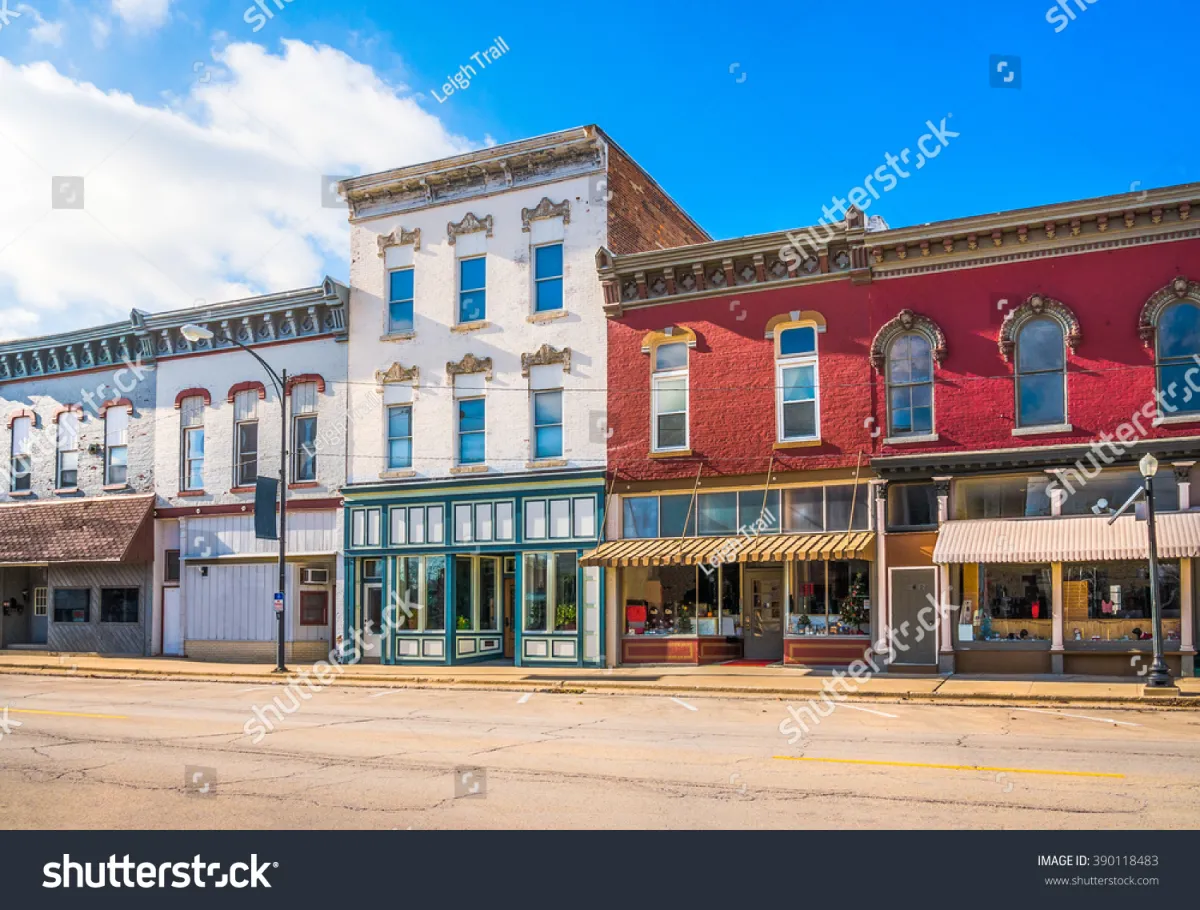 Photo: Main Street, via www.shutterstock.com
 Photo: First National, via w7.pngwing.com
By noon, you have your loan.
That scenario sounds almost fictional today. But for a significant stretch of American history — roughly from the post-war boom through the early 1980s — it was simply how small business lending worked. Local banks made local decisions, and the person sitting across the desk from you had context that no algorithm could replicate.
Character as Collateral
Mid-century American banking was deeply community-rooted in ways we've largely stopped appreciating. The savings and loan associations, mutual savings banks, and independent community banks that dotted every American town weren't just financial institutions — they were embedded in the social fabric of wherever they operated.
A loan officer at one of these banks didn't just look at your numbers. He looked at you. How long had your family been in the area? Did you pay your debts? Were you known as someone who followed through? Had you held steady employment? These weren't soft, sentimental questions — they were practical risk assessments made by someone with genuine local knowledge.
This wasn't a perfect system, and it's worth being honest about that. The same community trust that opened doors for some people kept them firmly shut for others. Racial discrimination in lending was widespread and well-documented, and women had almost no independent access to business credit before the Equal Credit Opportunity Act of 1974. The warmth of the old system had a very dark side that shouldn't be romanticized away.
 Photo: Equal Credit Opportunity Act, via exclusiverights.net
But for those the system did serve, it offered something genuinely remarkable: access to capital based on who you were and what you'd built, not just what a scoring model said about you.
When the Numbers Started Running the Show
The shift began gradually. The deregulation wave of the late 1970s and 1980s changed the competitive landscape for banks dramatically. Larger institutions started absorbing smaller ones. Decisions that once happened at the branch level got pushed to regional offices, then to national underwriting centers, then — eventually — to automated systems.
The FICO score, introduced commercially in 1989, became the lingua franca of American lending almost overnight. It was efficient, scalable, and consistent. It was also, by design, blind to the kind of contextual information a local banker had always used. Your twenty-year reputation in a community doesn't show up in a credit file.
For large-scale consumer lending, standardization made sense. But for small business loans — where the story behind the numbers often is the most important data point — something meaningful got lost in the translation.
The Modern Gauntlet
Apply for a small business loan today and you'll encounter a process that would have been unrecognizable to that 1962 hardware man. SBA loans — often the most accessible government-backed option — require extensive documentation: two to three years of business tax returns, personal financial statements, a detailed business plan, profit and loss projections, and collateral schedules. Processing times routinely run eight to twelve weeks. Approval rates hover around 50 percent even for prepared applicants.
Alternative lenders — the fintech platforms that promised to democratize small business credit — have filled some of the gap, but often at interest rates that would make your grandfather's banker wince. Annual percentage rates on some short-term business loans run well into double digits. Convenient, yes. Affordable, not always.
The result is a quiet restructuring of who gets to start something. Entrepreneurs with existing capital, strong credit histories, and professional networks to help them navigate the paperwork have a fundamentally different experience than first-generation business owners who are starting from scratch. The playing field isn't level — and the way we structure lending is part of why.
What the Numbers Don't Know About You
There's a community bank movement in the United States that's been trying to hold onto something of the older model. Community Development Financial Institutions — CDFIs — operate specifically to serve borrowers that traditional banks overlook, and some of them still make relationship-based decisions in ways that would feel familiar to that mid-century loan officer.
But they're the exception, not the rule. For most American entrepreneurs, the path to startup capital runs through systems that have never heard of them, don't know their town, and can't weigh the fact that they've been showing up reliably for twenty years.
That's not just a financial story. It's a story about what kind of opportunity we've decided to make available — and to whom. Before you arrived, the answer to that question looked quite different. Whether it looked better depends on who you were. But it was undeniably more human.