When a Coach's Phone Call Was All It Took to Change a Kid's Life
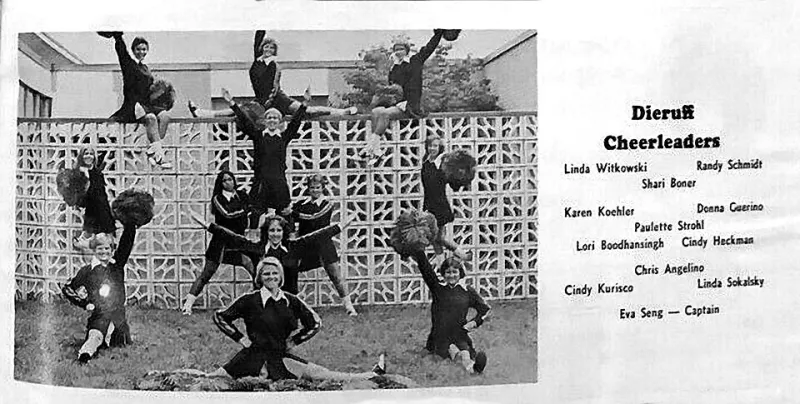
Photo: Self Scanned, Public domain, via Wikimedia Commons
When a Coach's Phone Call Was All It Took to Change a Kid's Life
There's a story that used to play out in small towns all over America, and it went something like this: a kid showed up at tryouts. He was faster than everyone else, or she could shoot from spots nobody else could reach. The high school coach noticed. A few phone calls were made. A college coach drove out to watch a couple of games. And somewhere between junior and senior year, that kid got a scholarship offer — the kind that changed the whole trajectory of a family.
Nobody hired a recruiting consultant. Nobody built a highlight reel in October of seventh grade. Nobody spent the summer driving to tournaments in four different states. The talent was visible because the kid showed up and played. That was enough.
For a lot of American families right now, that world sounds like a fairy tale.
The Era When the Game Was Just the Game
Through the 1960s, 70s, and into the 1980s, youth and high school sports in America operated on a beautifully simple model. You played for your school, your town, your neighborhood. The coach was usually a teacher or a local figure who did it because he loved the sport. Equipment was provided. Travel was limited to regional rivals. The cost to participate was essentially nothing — maybe a pair of cleats and a ride to practice.
College recruiters operated through a network of relationships with high school coaches. If your coach knew you were special, he made a call. If a scout happened to catch your game, that was a bonus. The system was informal, sometimes imperfect — talented kids in truly remote areas could get overlooked — but it was fundamentally accessible. You didn't need money to be seen. You needed ability.
And that accessibility meant something culturally. Sports were a genuine equalizer. A kid from a working-class family in rural Pennsylvania could earn the same scholarship as a kid from a wealthy suburb in Connecticut. The playing field, literally and figuratively, was level.
The Machinery That Replaced It
Somewhere in the 1990s, and accelerating sharply through the 2000s, something changed. Club sports and travel leagues began to emerge as a parallel — and eventually dominant — system alongside traditional school athletics. The logic made a certain kind of sense at first: more competition, higher-level exposure, better development.
But the economics were stark from the start. Travel league fees, tournament entry costs, hotels, flights, equipment, and private coaching quickly added up to thousands of dollars per year. By the 2010s, families with serious youth athletes were routinely spending between $5,000 and $20,000 annually — and in elite sports like hockey or gymnastics, the number could climb far higher.
A 2019 survey by the Aspen Institute found that the average American family spent $693 per child per sport per season on youth athletics — a figure that had nearly tripled over the previous decade. And that's the average. Families chasing scholarship-level visibility were spending multiples of that.
Meanwhile, college recruiters shifted their attention. Why attend a high school game in a small gym when you could go to a showcase tournament and evaluate fifty prospects in a single weekend? The showcases became the new currency of recruitment — and they were invitation-only events that cost money to attend and required prior exposure in club circuits to even access.
The result: the informal, relationship-driven system that once elevated talent regardless of income was quietly replaced by a pay-to-compete pipeline.
What Families Are Actually Buying
It's worth being honest about what all that spending does and doesn't buy. For a small number of genuinely elite athletes, the investment in club sports and elite exposure pays off in scholarships that far exceed what was spent. Those stories are real.
But the NCAA estimates that only about 2% of high school athletes go on to play at the college level in any capacity. The odds of a full athletic scholarship are far slimmer still. For the vast majority of families pouring money into travel leagues and private coaches, the return is not a scholarship — it's the experience itself, which is valuable, but not in the way it was sold.
There's also a psychological cost that doesn't show up in the budget spreadsheets. When sport becomes a financial investment, the pressure on children changes. The joy of playing — the spontaneous, unstructured, purely physical joy that drew kids to sports in the first place — gets compressed under the weight of performance expectations and parental anxiety about whether the investment is paying off.
Burnout rates among youth athletes have climbed steadily. Studies show that specializing in a single sport before age twelve — something the club system actively encourages — is associated with higher rates of overuse injury and early dropout. Kids who might have played three sports through high school now play one, year-round, from the age of eight.
The Talent That's Being Left Behind
Perhaps the most consequential shift is what happens to kids whose families simply can't afford to play the game. When the path to visibility runs through $400-per-weekend showcase tournaments, talented athletes from lower-income households are systematically excluded from the recruiting pipeline — not because they lack ability, but because they lack access.
This is genuinely new. The kid in 1975 who could throw a fastball at ninety miles an hour got noticed because he threw a fastball at ninety miles an hour. The same kid today might never get in front of a college coach if his family can't afford the circuit that puts him in the room.
When the Game Was Enough
There's a reason so many Americans over fifty look back at their youth sports experience with uncomplicated warmth. It was simple. You played because you loved it. Your parents watched because they loved you. If something remarkable happened — if you turned out to be genuinely gifted — the system found you.
That simplicity wasn't naive. It was actually functional. It produced generations of great athletes and, more importantly, generations of kids who grew up understanding what sport was actually for: the effort, the teamwork, the competition, the sheer pleasure of being good at something physical.
What we've built in its place is more sophisticated, more organized, and vastly more expensive. Whether it's better is a question worth sitting with.