The Coin Flip Was the Original Algorithm — And Kids Were Better Off For It
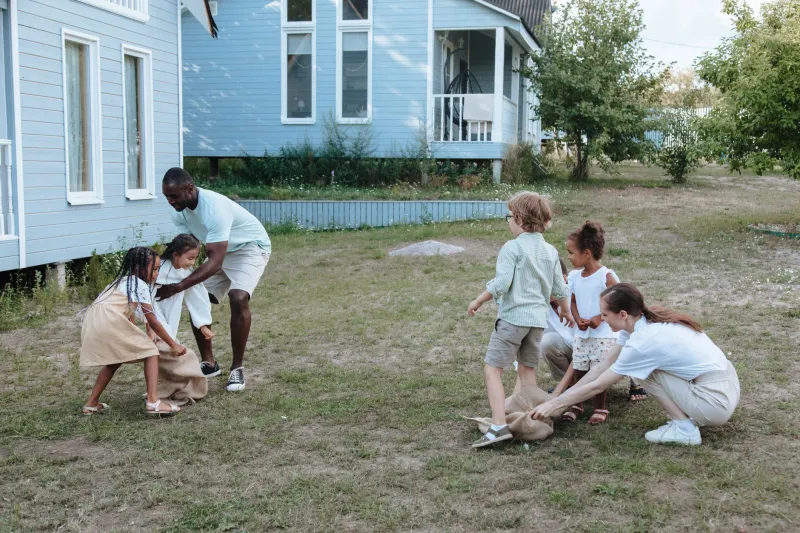
Picture a group of eight-year-olds in a backyard, circa 1983. Someone wants to play kickball. Someone else wants to ride bikes. A third kid suggests the creek. There's no adult supervising this negotiation. There's no app to poll preferences. There's just a handful of kids, a summer afternoon, and the ancient social machinery of childhood: arguing, compromising, someone pulling a quarter out of their pocket, and everyone agreeing — more or less — to live with the result.
The coin landed. They went to the creek. Nobody screenshotted the argument first.
The Unstructured Laboratory of Growing Up
For most of American childhood history, kids worked things out themselves. Not because adults didn't care, but because the operating assumption was that friction between children was educational, not dangerous. When two kids disagreed about who was out at second base, they didn't escalate to a parent. They argued, cited witnesses, appealed to whatever informal code of honor existed on that particular block, and eventually came to some version of a resolution — or played the whole inning over.
These weren't small moments. They were the repetitions that built the muscle of social competence. Learning to read a room. Learning when to push back and when to let something go. Learning that most conflicts have a middle ground if you're patient enough to find it. Learning that losing a coin flip isn't a crisis — it's just Tuesday.
Conflict, handled at child scale, was the training ground for adult life. The playground was a low-stakes environment where the consequences of social failure were temporary and the lessons were permanent.
When the Phone Entered the Picture
The smartphone didn't just give kids a device. It gave childhood a permanent record.
Before phones, a fight between two twelve-year-olds lived in the moment and dissolved with time. Words said in the heat of argument faded from memory, or at least from evidence. Friendships repaired themselves because there was nothing to go back and relitigate. The argument existed in the past tense almost as soon as it ended.
Now it exists in screenshots. In group chat logs. In TikTok callouts and subtweeted shade. The conflict doesn't end at the school gate — it follows kids home, buzzes on their nightstands at 11 PM, and reconstitutes itself fresh the next morning with new participants who weren't even there for the original incident.
The social dynamics that used to reset overnight now compound. A misread tone in a text message — the kind of miscommunication that would have evaporated in a face-to-face conversation — becomes a days-long dispute with documented evidence and an audience. Kids who once would have sorted things out by lunchtime are now navigating public relations crises before they're old enough to drive.
The Lost Art of the Improvised Solution
There's something worth remembering about how kids used to make decisions in groups. It was genuinely creative. Someone would suggest odd-or-even. Someone else would propose a race to the stop sign, winner chooses. Arguments about fairness got resolved through invented systems that the group constructed in real time, tested, and discarded or adopted based on whether they worked.
This is not a trivial skill. The ability to build consensus, propose a framework, get buy-in from skeptics, and move forward — that's basically what every functional workplace and marriage runs on. And kids were practicing it constantly, without anyone calling it social-emotional learning or scheduling a workshop around it.
When you hand a group of kids a device that can poll them, rank their preferences, or escalate their dispute to a parent with a single tap, you short-circuit that process. The improvised solution never gets invented. The consensus muscle never gets built.
Resilience Was Spelled D-I-S-A-P-P-O-I-N-T-M-E-N-T
The coin flip also did something else that's quietly undervalued: it taught kids to lose without it meaning something about them.
You called heads. It was tails. The other kid picked the movie. Life went on. This happened dozens of times a year across the full spectrum of childhood decisions — who got the last piece of pizza, who batted first, whose house you went to after school. Losing was so routine and so low-stakes that it stopped registering as loss. It was just the natural rhythm of shared life.
Compare that to a childhood where every preference is tracked, every dispute is documented, and social standing is quantified in likes and followers. The stakes of being wrong, of losing, of being on the less popular side of an argument, have never felt higher. And yet the actual consequences have never been lower. That gap — between felt stakes and real stakes — is where anxiety lives.
What Happens Next
None of this means the old way was perfect. Plenty of childhood conflicts in previous generations went unresolved in damaging ways, particularly for kids who were isolated or bullied without any adult awareness. The absence of oversight wasn't always a virtue.
But the casual, improvised, self-governing quality of pre-digital childhood — the coin flips and the back-alley negotiations and the arguments that dissolved over a shared bag of chips — produced something real. It produced adults who knew how to sit with minor discomfort, broker small compromises, and move forward without a record of every slight.
That's harder to teach in a classroom. It was almost effortlessly absorbed on a front porch in 1979.
The quarter is still in your pocket. The question is whether we ever hand it back to kids and step away long enough to let them use it.