When 3 PM Actually Meant School Was Over — Before Homework Hijacked Family Time

The Bell That Used to Mean Freedom
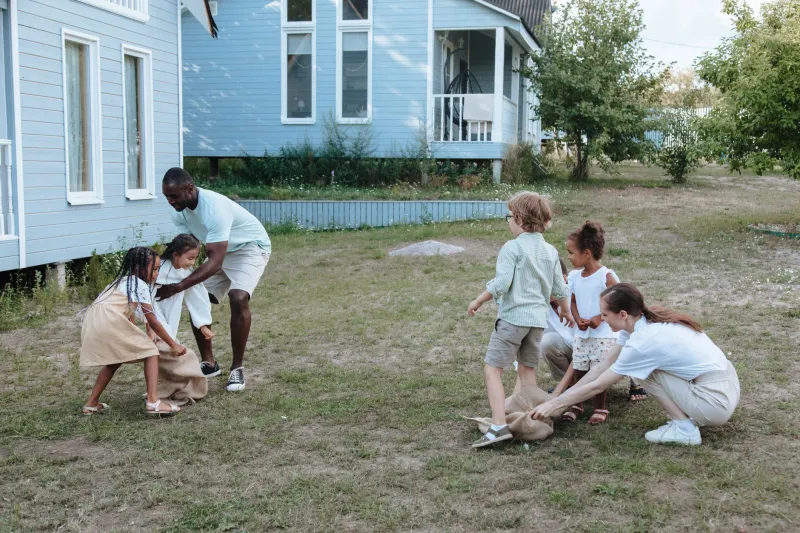
In 1965, when the 3 PM bell rang at Lincoln Elementary in suburban Chicago, kids burst through the doors into genuine freedom. Their education was complete for the day. Some had a worksheet to finish — maybe 15 minutes of math problems or reading a few pages from their textbook. But most afternoons belonged entirely to them: pickup baseball games, building forts, riding bikes until streetlights came on.
 Photo: Lincoln Elementary, via i.pinimg.com
Today, that same school bell signals merely a change of venue. Kids gather their heavy backpacks, knowing they're carrying 2-3 hours of additional schoolwork home. The afternoon and evening will be structured around completing assignments, projects, and test preparation. Free play has become a scheduled activity — if there's time at all.
When Homework Had Boundaries
For most of the 20th century, homework served a simple purpose: brief reinforcement of the day's lessons. Elementary students might practice spelling words or complete a page of arithmetic. High schoolers had more substantial assignments, but even they rarely faced more than an hour of work per night.
The unspoken rule was that homework shouldn't interfere with family time, chores, or childhood itself. Teachers understood that kids needed unstructured time to develop independence, creativity, and social skills that couldn't be taught in a classroom.
Parents weren't expected to become co-teachers. Homework was the child's responsibility, completed independently at the kitchen table before dinner. If a kid struggled, they worked it out with their teacher the next day — not through a parent-mediated email exchange at 9 PM.
The Pressure Cooker Builds
The transformation began in the 1980s, accelerating through the 1990s and 2000s. Multiple forces converged to create today's homework-heavy culture: increased college competition, standardized testing mandates, and a growing belief that more academic work automatically meant better education.
The "Nation at Risk" report in 1983 sparked fears that American students were falling behind internationally. Schools responded by assigning more homework, assuming that increased academic intensity would boost achievement. The logic seemed sound: if some homework was good, more must be better.
 Photo: Nation at Risk, via www.bitchyx.it
Meanwhile, college admissions became increasingly competitive. Parents began viewing elementary school as preparation for high school, which was preparation for college applications. Every assignment became part of a 12-year strategy to build the perfect transcript.
The Kindergarten Desk Job
Perhaps nowhere is the change more dramatic than in early elementary grades. Kindergarteners now routinely receive homework packets that would have been challenging for third-graders a generation ago. Five-year-olds practice sight words, complete math worksheets, and work on reading logs that require parental supervision.
First and second-graders often spend an hour or more each evening on assignments designed to "reinforce learning." But research consistently shows that homework provides no academic benefit for children under 10 — and may actually harm their attitude toward learning.
The developmental needs of young children — time for imaginative play, physical activity, and family interaction — have been systematically squeezed out by academic demands that mirror adult work schedules.
When Family Time Became Homework Time
The dinner table conversation has changed fundamentally. Instead of sharing stories about their day, families often spend meals discussing assignments, upcoming projects, and test schedules. Evenings revolve around homework supervision, with parents functioning as unpaid teaching assistants.
Weekends, once reserved for family activities and free play, now include homework catch-up time and project work. Many families schedule their social activities around assignment deadlines rather than their own preferences and needs.
This shift has particularly impacted working parents, who find themselves managing a second job as homework supervisors after their regular workday ends. The stress affects entire families, not just the students carrying the backpacks.
The Research Reality
Despite the homework explosion, American student achievement hasn't improved correspondingly. Countries that consistently outperform the US on international assessments often assign less homework and prioritize play-based learning in early grades.
Research by homework expert Harris Cooper found that the optimal amount of homework increases with grade level — about 10 minutes per grade per night. That means 20 minutes for second grade, 60 minutes for sixth grade. Yet many American students receive 2-3 times these amounts.
More concerning, excessive homework correlates with increased stress, sleep deprivation, and reduced engagement with learning. The very tool meant to improve education may be undermining it.
The Lost Arts of Childhood
What disappeared when homework expanded to fill every evening? The informal education that happens during unstructured time: learning to negotiate with friends, developing independence, discovering personal interests, and simply being bored enough to create something new.
Kids once learned responsibility by doing chores, managing their own time, and solving problems without adult intervention. They developed social skills through neighborhood games where they had to create rules, resolve conflicts, and include different personality types.
They also learned that life included downtime — that not every moment needed to be productive or educational. This understanding of balance and rest has largely vanished from childhood.
The International Perspective
Finland, consistently ranked among the world's top education systems, assigns minimal homework in elementary grades and emphasizes play-based learning. Finnish children don't start formal academics until age 7, yet they outperform American students who begin academic instruction at 4 or 5.
Similarly, countries like Denmark and Germany limit homework in early grades and mandate that schools not assign work during family vacation periods. These policies reflect a cultural understanding that childhood development requires more than academic instruction.
Reclaiming the Afternoon
Some American schools and districts are beginning to question the homework arms race. They're implementing policies that limit assignments, ban homework on weekends, or eliminate it entirely in early grades. These initiatives often face resistance from parents who equate homework with academic rigor.
But families who've experienced reduced homework loads report better relationships, less stress, and more time for activities that build character and life skills. Children read more for pleasure when they're not required to complete reading logs. They engage more enthusiastically with learning when it doesn't dominate their entire day.
What 3 PM Used to Promise
The 3 PM bell once represented a clear boundary between school time and childhood time. It promised that kids could be kids — messy, curious, imaginative, and free to explore the world on their own terms.
Today's children often experience no such boundary. Their education extends into family time, creating stress for everyone involved and eliminating the very experiences that help children develop into independent, creative adults.
Restoring that boundary doesn't mean abandoning educational excellence. It means recognizing that true learning happens both inside and outside the classroom, and that childhood itself is education in skills that no worksheet can teach.