Your Doctor Used to Decide When You Healed — Now Your Insurance Company Does
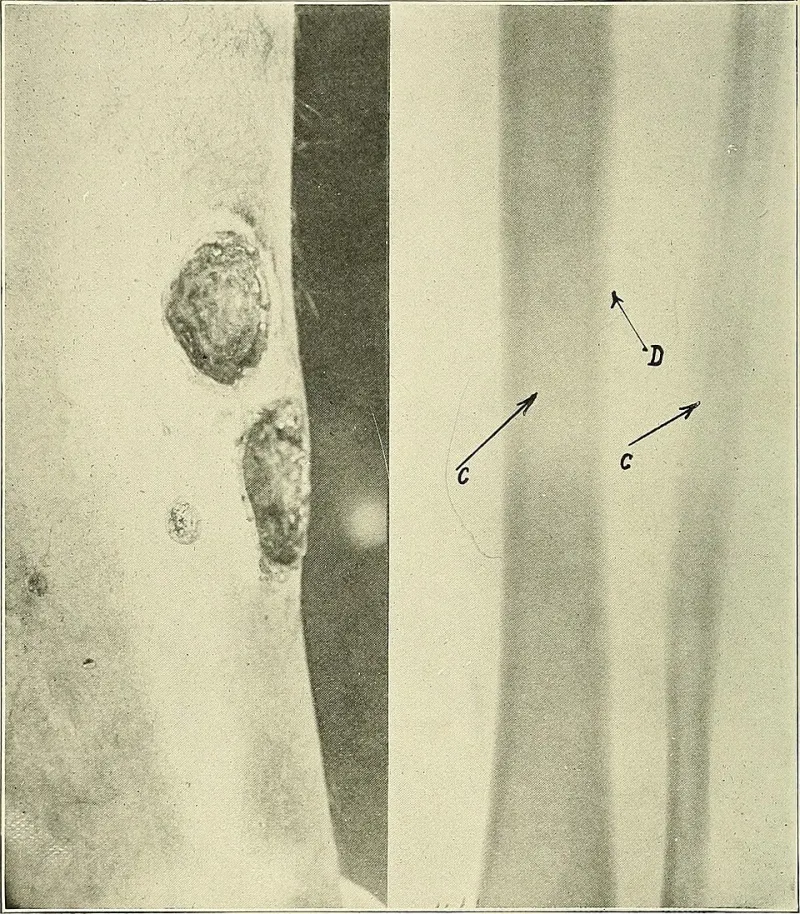
Photo: Internet Archive Book Images, No restrictions, via Wikimedia Commons
There was a time when a broken bone meant exactly one thing: you stayed home until you were better. Your doctor said six weeks, and that was the end of the conversation. Nobody called to check whether you could answer emails from the couch. Nobody suggested you could manage light duties with a cast on your forearm. The prescription was rest, and rest was what you got.
Today, recovery from something as straightforward as a fracture has become a three-way negotiation between your physician, your employer, and an insurance adjuster who has never met you and never will.
When the Doctor's Word Was Final
Think back to how things worked in the 1960s and 1970s. If you broke your wrist on a construction site or snapped your collarbone in a car accident, the process was refreshingly simple. You went to the hospital, the doctor set the bone, and you were handed a recovery timeline that everyone respected. Your employer knew the rules. Your family adjusted. The community understood.
There was no prior authorization required before you could get an X-ray. There was no case manager calling your home three days after discharge to assess your "functional capacity." The idea that a clerical worker at an insurance company could override a physician's recovery recommendation would have sounded like something out of a dark science fiction novel.
And here's the thing — that simplicity wasn't just more humane. It worked. Fractures healed properly because people actually rested them. Return-to-work rates were strong because workers came back whole, not half-recovered and quietly nursing a complication that would sideline them again two months later.
The Machinery That Changed Everything
The shift didn't happen overnight. Through the 1980s and into the 1990s, managed care transformed the relationship between patients, providers, and insurers. Suddenly, treatment decisions that once lived exclusively in the exam room began migrating into corporate offices. Utilization reviews became standard practice. Insurance companies hired medical reviewers — often doctors themselves, though rarely specialists in the relevant field — to evaluate whether prescribed recovery timelines were "medically necessary."
Workers' compensation systems, which had once been relatively straightforward, grew into elaborate bureaucracies. Employers, facing rising premiums, began pushing back on extended leave. "Return-to-work" programs — some of them genuinely helpful, many of them not — became a standard tool for getting injured employees back on the payroll before they were fully ready.
By the time high-deductible health plans became the norm in the 2000s and 2010s, another pressure had entered the picture: the financial cost of actually staying home. If your deductible is $4,000 and your short-term disability pays 60% of your salary, the math starts pushing you back to your desk faster than any doctor would recommend.
What Cutting Recovery Short Actually Costs
Orthopedic specialists will tell you that bones don't negotiate. A tibia fracture requires roughly six to eight weeks of restricted weight-bearing, and that timeline exists because of biology, not bureaucracy. When patients return to physical activity too early — whether because of insurance pressure, financial stress, or employer expectations — the consequences are real and often lasting.
Malunion, where bone heals in a misaligned position, becomes more likely when fractures aren't properly immobilized or rested. Re-fracture rates climb. Chronic pain conditions develop. What should have been a clean, finite injury becomes a recurring problem that follows someone for years.
A 2019 study published in the Journal of Occupational and Environmental Medicine found that employees who returned to work before physicians deemed them fully recovered had significantly higher rates of re-injury and longer cumulative absences over a 12-month period. The short-term savings for insurers and employers, in other words, frequently became long-term costs — paid by the worker.
The Human Side of the Story
Beyond the clinical data, there's something worth sitting with here. The older model of recovery carried an implicit message: you matter more than your productivity. When a community-based employer told an injured worker to take the time they needed, it communicated something about how that person was valued. It acknowledged that a human body is not a machine with replaceable parts.
The modern system communicates something different. When your recovery is managed by a claims portal, timed by a software algorithm, and subject to appeal by someone reading from a standardized protocol, the message — even when everyone involved is acting in good faith — is that your healing is a cost to be managed.
That shift in framing has consequences that go beyond physical outcomes. Research consistently links workplace injury experiences to mental health. Workers who feel unsupported during recovery report higher rates of depression and anxiety, and are less likely to return to the same employer. The loyalty that used to flow naturally from an employer saying "take care of yourself" has quietly evaporated from a lot of American workplaces.
A Simpler Standard That Still Makes Sense
None of this is to say the old system was perfect. There were fraudulent claims, there were workers who genuinely needed encouragement to return, and there were employers who handled injuries with tremendous care and compassion long before HR departments existed.
But the baseline expectation — that a doctor's recovery recommendation should be the beginning and end of the timeline — was a reasonable one. It put medical expertise where it belonged: in charge of medical decisions.
Somewhere along the way, that standard got quietly renegotiated. And most people didn't notice until they were the ones sitting at home with a cast on their arm, fielding a call from a case manager asking if they could perform "sedentary duties."
Your body still heals on the same schedule it always did. Everything else around that process has just gotten a lot more complicated.