When Getting Hurt at Work Meant Getting Back to Work — Not Filing for Bankruptcy

The Day Everything Changed
In 1975, Frank Kowalski slipped on a wet floor at the General Motors plant in Detroit and broke his leg in two places. His supervisor drove him to the company clinic, where the plant doctor set the bone and wrote him a prescription. GM covered everything — the X-rays, the cast, the follow-up visits, even his full salary for the six weeks he couldn't work. When Frank returned to the line, his biggest concern was whether his leg would ache when it rained.
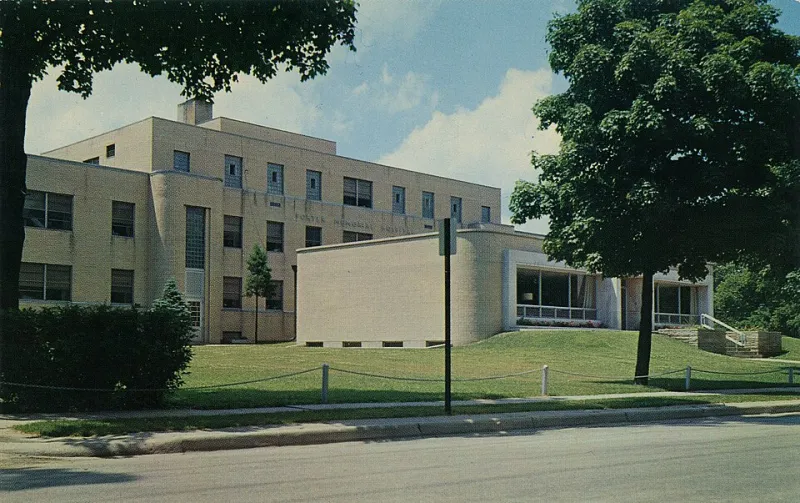
 Photo: General Motors plant, via www.hoodamath.com
 Photo: Frank Kowalski, via live.staticflickr.com
Today, that same accident would likely trigger a cascade of medical bills, insurance denials, and out-of-network charges that could follow Frank's family for decades. The difference isn't just inflation — it's a fundamental shift in who bears responsibility when American workers get hurt.
When Companies Actually Cared for Their People
For much of the 20th century, workplace injuries operated under a simple principle: if you got hurt doing your job, your employer made sure you got better. This wasn't just good ethics — it was good business. Companies maintained relationships with local doctors, negotiated group rates for their workers, and understood that a healthy workforce was a productive workforce.
Major employers often ran their own clinics. Steel mills had full-time physicians on staff. Manufacturing plants kept nurses on every shift. Even smaller businesses maintained relationships with family doctors who would see their workers immediately, no questions asked about insurance cards or prior authorization.
The paperwork was minimal. Workers didn't navigate phone trees or wait weeks for approval. They got hurt, they got treated, they got back to work. The system prioritized healing over billing.
The Union Safety Net
Strong labor unions amplified this protection. Union contracts guaranteed comprehensive medical coverage with minimal out-of-pocket costs. Deductibles, when they existed at all, rarely exceeded $50 or $100 — roughly equivalent to $300-400 today, not the $5,000-15,000 deductibles that have become standard.
Unions also negotiated for injured workers to receive their full wages during recovery. This wasn't disability insurance with byzantine qualification requirements — it was straightforward compensation that recognized injuries as an inevitable cost of doing business, not a personal failing requiring punishment through poverty.
Perhaps most importantly, union contracts prevented retaliation. Workers could report injuries and seek treatment without fear of losing their jobs or being labeled "accident-prone." This created a culture where workplace safety improved because problems got addressed rather than hidden.
The Great Cost Shift
By the 1990s, everything had changed. Employers discovered they could shift medical costs to workers through high-deductible health plans while maintaining the appearance of providing coverage. What looked like insurance on paper often functioned more like a payment plan for medical debt.
Simultaneously, the rise of "managed care" introduced layers of administrative complexity designed to discourage claims. Workers now needed pre-authorization for treatments, referrals to see specialists, and approval for medications their doctors prescribed. Each step created opportunities for denial and delay.
The consolidation of healthcare systems meant fewer doctors accepting workers' compensation cases. Those who did often required upfront payment, forcing injured workers to navigate reimbursement bureaucracies while managing their recovery.
The Modern Reality
Today's workplace injury typically unfolds like this: A worker gets hurt and reports to an urgent care center that may or may not be in their insurance network. They receive initial treatment but need follow-up care that requires prior authorization. Their claim gets disputed. They're sent for an "independent" medical evaluation by a doctor chosen by the insurance company.
Meanwhile, they're missing work but their short-term disability coverage only pays 60% of their salary — if they qualify. Their medical bills accumulate while various parties dispute responsibility. Even if everything eventually gets covered, they've likely paid hundreds or thousands out of pocket and spent dozens of hours on phone calls and paperwork.
For serious injuries requiring surgery or extended treatment, workers often face impossible choices: accept substandard care to stay within their network, or get proper treatment and risk financial ruin.
Beyond the Individual Cost
This shift has broader implications for workplace safety. When injuries become financial catastrophes for workers, they're less likely to report minor incidents that could prevent major accidents. They work through pain and aggravate injuries rather than seek early treatment. They return to work before fully healing to avoid losing income.
Employers, meanwhile, have discovered that making injury reporting difficult and expensive effectively reduces their workers' compensation premiums — not by improving safety, but by discouraging claims.
What We've Lost
The old system wasn't perfect, but it recognized a fundamental truth: workplace injuries are a predictable cost of economic activity, not personal moral failures. When a society shifts that cost from employers to workers, it's making a choice about whose financial security matters more.
Frank Kowalski's broken leg was an inconvenience that interrupted his work for six weeks. Today, it could interrupt his family's financial stability for six years. The injury might heal the same way, but the aftermath has become a completely different kind of trauma — one that often proves more devastating than the original accident.
In transforming workplace injuries from temporary setbacks into potential financial disasters, we've quietly redefined what it means to be protected at work. The safety net didn't disappear — it just became full of holes that individual workers are expected to navigate on their own.