How the Humble Gas Station Became America's Most Unlikely Destination
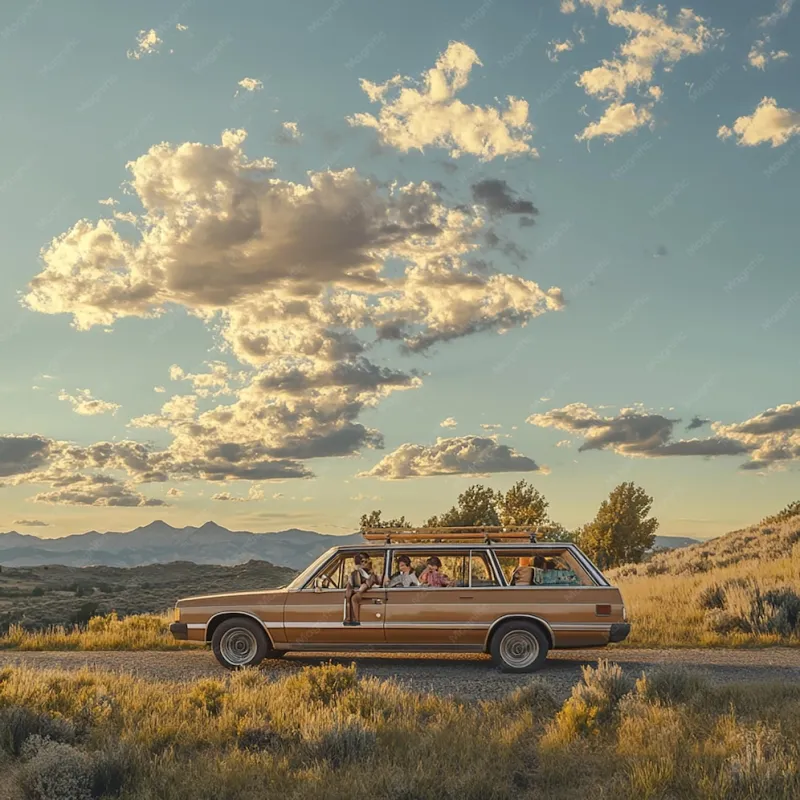
If you drove across America in 1978, stopping for gas was about as exciting as stopping for a red light. You pulled off the highway, a guy in a uniform sometimes came out to pump it for you, you paid in cash, maybe used a bathroom that tested your commitment to personal hygiene, and you left. The whole thing took five minutes. Nobody lingered.
Fast forward to today and that same stop on the same highway might involve a barista, a hot food counter, a rewards program, electric vehicle charging bays, a seating area with Wi-Fi, and a selection of snacks that rivals a small grocery store. The gas station didn't just grow up. It became something else entirely.
The Original Pit Stop
The early American gas station was a monument to efficiency. It existed for one reason: to get fuel into your car and get you back on the road. The design reflected that purpose. A couple of pumps, a small booth or office, maybe a rack of maps — because yes, people navigated with paper maps — and not much else.
Service stations in the mid-twentieth century often included mechanics, which made them genuinely useful in a different way. A trained person who could look under your hood was more valuable than a frozen burrito. But the retail footprint was minimal. Nobody was building a business model around snack sales.
The vending machine era represented the first small step toward something more. A machine dispensing soda or chips near the pump island was about as ambitious as convenience got. Customers didn't expect more, and operators didn't offer it.
The Convenience Store Merger That Changed Everything
The transformation really began in the 1970s and accelerated through the 1980s, when oil companies and independent operators started recognizing that the real money wasn't in the fuel — it was in everything else.
Fuel margins are notoriously thin. Always have been. The profit on a gallon of gas, after taxes, transportation, and operating costs, is often just a few cents. But a cup of coffee? A bag of chips? A hot dog rotating on a heated roller? Those margins are entirely different. Operators figured out that the pump was just the lure. The store was the business.
Chains like 7-Eleven, Wawa, Sheetz, and later Buc-ee's didn't just add a convenience store to a gas station. They inverted the whole concept. The store became the destination. The fuel became the reason you pulled in. It was a subtle but revolutionary shift in how Americans related to the road.
Buc-ee's and the Temple of the Road Trip
Nothing illustrates the evolution more dramatically than Buc-ee's, the Texas-born travel center chain that has expanded across the South and into the broader US with locations that can stretch to 74,000 square feet. That's not a gas station. That's a retail experience with pumps outside.
A Buc-ee's stop offers barbecue, fudge, branded merchandise, dozens of restroom stalls (famously clean ones, which has become a genuine selling point), and enough snack variety to stock a college dorm for a semester. People plan road trips around Buc-ee's locations. They post about it on social media. They buy the beaver merchandise.
The fact that a gas station chain has achieved something approaching cult status says everything about how far the category has traveled from its origins.
Electric Vehicles and the Next Reinvention
Now the gas station faces its most significant transformation yet — one that isn't driven by consumer taste but by the nature of the product itself.
Charging an electric vehicle takes longer than filling a tank with gas. A lot longer. Even fast chargers require twenty minutes to half an hour for a meaningful charge. That changes the entire dynamic of the pit stop. Five-minute transactions become half-hour visits, and suddenly the amenities aren't just a bonus — they're the whole point.
Travel centers with EV charging infrastructure are being designed around this reality. Longer stays mean better food options, more comfortable seating, outdoor spaces, and in some cases, entertainment. Tesla's Supercharger network placed early chargers near shopping centers and restaurants for exactly this reason. The wait has to be worth something.
The gas station, it turns out, is being forced to become even more hospitable just as the fuel that built it starts to fade.
What It All Says About Us
The evolution of the American gas station is, in a roundabout way, a story about time and how our relationship with it has changed. The original pit stop was designed to minimize the interruption. Modern travel centers are designed to make the interruption enjoyable enough that you don't mind it.
We've gone from optimizing for speed to optimizing for experience, even in the most utilitarian of settings. Even when we're just trying to get somewhere else.
There's something almost philosophical about that — the idea that a place once defined by its invisibility has become one of the more interesting stops on the American road. The pit stop became a destination, and somewhere along the way, that started to feel completely normal.
Which is exactly how cultural change works. You barely notice it happening until you try to explain to someone under thirty that gas stations used to be boring on purpose.