When Flying Was an Event Worth Dressing Up For — And Your Wallet Could Handle It
Your grandmother probably has a photo somewhere — her and your grandfather boarding a TWA flight to Los Angeles in 1967, both dressed like they're heading to church on Easter Sunday. She's wearing a carefully coordinated outfit with matching shoes and handbag. He's in a pressed suit with a thin tie. They're smiling like they're about to embark on the adventure of a lifetime.
 Photo: Los Angeles, via cdn.britannica.com
And here's the kicker: their round-trip tickets cost less, adjusted for inflation, than what you paid for your last cramped flight in a middle seat.
The Golden Age Had Actual Gold-Plated Service
In 1970, a round-trip flight from New York to Los Angeles cost about $550 — roughly $4,100 in today's money. That sounds expensive until you realize what you got for that price: a spacious seat with actual legroom, a full hot meal served on real china, complimentary cocktails, and flight attendants who had time to chat with passengers instead of racing through safety demonstrations.
 Photo: New York, via wallpapercave.com
Today's equivalent flight can easily cost $400-600, but you'll pay extra for everything that used to be included. Checked bags? That'll be $35 each way. A meal that isn't peanuts? Another $15. Extra legroom? Add $50-100. By the time you've recreated the 1970s experience, you've spent more money for a demonstrably worse journey.
But the real difference wasn't what airlines provided — it was how they treated the entire experience.
When Airports Were Destinations, Not Ordeals
Flying in the pre-deregulation era felt like participating in something special. Airports featured elegant lounges, sit-down restaurants, and observation decks where families gathered to watch planes take off. The journey began the moment you entered the terminal, not when you finally squeezed into your assigned seat.
Passengers arrived early not because of security theater, but because airports were genuinely pleasant places to spend time. You could walk your loved ones to the gate, regardless of whether you had a boarding pass. Children pressed their faces against windows, watching the choreographed ballet of ground crews preparing massive aircraft for flight.
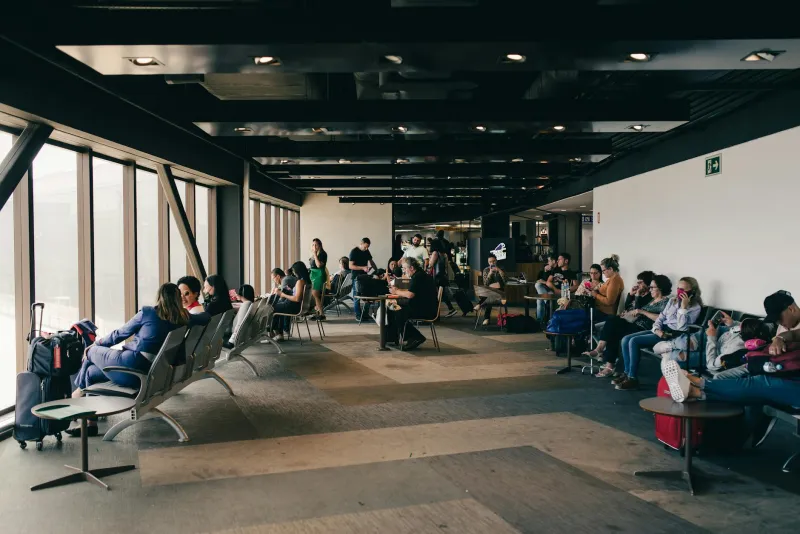
Compare that to today's airport experience: endless security lines, overpriced food courts serving reheated chain restaurant fare, and gate areas designed to pack as many anxious travelers as possible into the smallest space. Modern airports feel like transit prisons, not gateways to adventure.
The Dignity of Departure
Perhaps nothing illustrates the transformation more clearly than how people dressed to fly. In 1965, passengers treated air travel like a special occasion. Men wore suits or sport coats. Women donned their finest dresses or carefully coordinated outfits. Children were dressed like they were visiting distant relatives.
This wasn't just vanity — it reflected how society viewed flying. Air travel was democratized luxury, accessible to middle-class families but still special enough to warrant your Sunday best. Airlines reinforced this perception with marketing campaigns that emphasized glamour, sophistication, and the romance of flight.
Today's typical flight looks like a pajama party gone wrong. Passengers wear whatever they threw on that morning, airlines encourage "comfortable" attire for long flights, and the entire experience has been stripped of any pretense to elegance. We've gained convenience and lost ceremony.
How Deregulation Changed Everything
The Airline Deregulation Act of 1978 promised lower fares and increased competition. It delivered on the first promise, at least initially, but the hidden cost was the complete transformation of who airlines served and how they operated.
Before deregulation, airlines competed on service quality because fares were regulated. After 1978, they competed almost exclusively on price. This race to the bottom eliminated everything that wasn't absolutely essential to getting passengers from Point A to Point B.
Out went spacious seating, complimentary meals, and attentive service. In came cramped cabins, fee-based everything, and the optimization of every square inch for maximum revenue generation. Airlines discovered they could pack more passengers into smaller spaces, charge separately for services that used to be included, and still fill their planes.
The Middle Class Gets Squeezed Out
Ironically, deregulation made flying both more accessible and less accessible simultaneously. Budget airlines opened up air travel to people who couldn't afford it before 1978, but they also created a two-tiered system that effectively priced middle-class comfort out of reach.
In 1970, there was basically one class of service that everyone could afford, and it was genuinely comfortable. Today, there are multiple classes, but the only comfortable ones cost more than those regulated fares ever did. The "democratization" of air travel actually created a more stratified experience than existed during the supposedly elitist regulated era.
What We Traded Away
The efficiency gains from deregulation are undeniable. More people fly more often to more places than ever before. But we've also lost something intangible — the sense that travel itself was an occasion worth celebrating.
Flying used to be a shared experience that brought out people's best behavior. Passengers helped each other with luggage, struck up conversations during delays, and treated fellow travelers with basic courtesy. The formal atmosphere encouraged formal behavior.
Today's flights often feel like public transportation at 35,000 feet. Passengers compete for overhead bin space, fight over armrests, and generally treat each other like obstacles rather than fellow adventurers.
The True Cost of Cheap Flights
When your grandparents dressed up to fly, they weren't just following social conventions — they were participating in a ritual that acknowledged the miracle of human flight. That $4,100 ticket (in today's money) bought them entry into an experience designed to honor both the technology and the passengers it served.
We've traded that dignity for efficiency, ceremony for convenience, and shared luxury for segregated service levels. The planes are safer, the routes more numerous, and the prices lower — but something essential about the journey has been lost in our rush to make flying as routine as riding a bus.
The next time you're crammed into a middle seat, fighting for armrest space while eating a $12 sandwich, remember that air travel once represented something grander. Your grandparents' Sunday best wasn't just about looking good — it was about honoring an experience that treated every passenger like they deserved to fly in style.