The Corner Repair Shop That Saved Everything
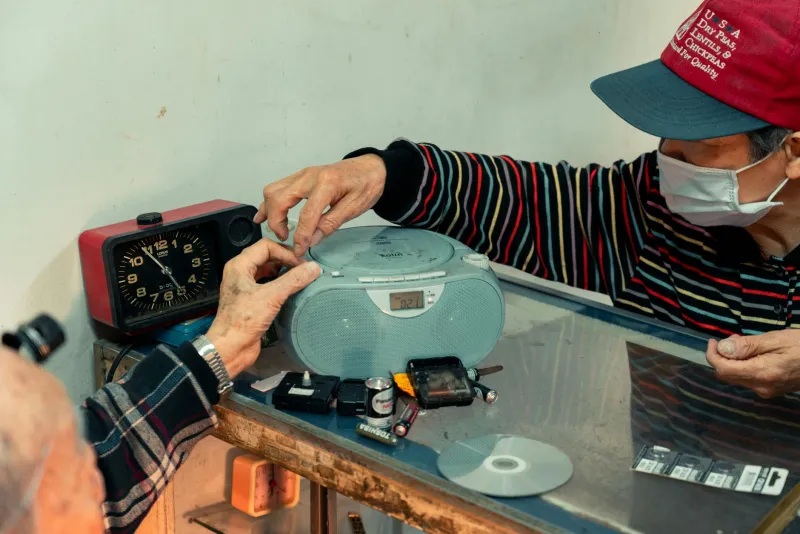
Walk through any American neighborhood in 1965, and you'd find at least one storefront with a hand-painted sign reading "Radio & TV Repair" or "Small Appliance Service." Inside, a guy in coveralls surrounded by the mechanical guts of blenders, vacuum cleaners, and television sets would diagnose your broken toaster with the confidence of a family doctor.
Back then, when your appliance wheezed its last breath, you didn't immediately start shopping for a replacement. You called Eddie's Repair or Murphy's Fix-It Shop, and by Thursday afternoon, your faithful kitchen companion was humming again.
When Everything Was Built to Be Fixed
The appliances your grandparents owned were constructed with an entirely different philosophy. Manufacturers designed products assuming they would break — and more importantly, assuming someone local would need to fix them.
Toasters had removable heating elements. Vacuum cleaners came with detailed exploded-view diagrams tucked inside the manual. Television sets had tubes that could be tested at the corner drugstore and replaced for a few dollars. Even washing machines were built with standard bolts and universally compatible parts.
This wasn't accidental. Companies like General Electric and Westinghouse operated under the assumption that a satisfied customer was one whose appliance lasted twenty years, not one who bought a new model every three.
The Repairman's Arsenal
Your local appliance doctor carried a toolbox that could resurrect almost anything. A handful of screwdrivers, some electrical tape, a soldering iron, and a coffee can full of universal screws, belts, and switches. The magic wasn't in sophisticated equipment — it was in understanding how things actually worked.
These craftsmen could rebuild a motor, rewire a heating element, or fabricate a replacement part from scratch. They kept drawers full of generic components that fit dozens of different brands. A drive belt was a drive belt. A heating coil was a heating coil.
More importantly, they could explain what went wrong in plain English. "Your thermostat's shot, but I've got one that'll work just fine. Give me twenty minutes."
The Death of the Fix-It Culture
Today's appliance landscape would be unrecognizable to that 1965 repairman. Modern devices are sealed units filled with proprietary components, circuit boards, and software that requires factory-authorized diagnostic equipment to understand.
Your smart refrigerator doesn't just keep food cold — it runs an operating system that receives updates over Wi-Fi. When it breaks, the local repair shop can't help because they don't have access to Samsung's proprietary parts database or the specialized training to reprogram the ice maker's motherboard.
Even simple appliances have become repair-resistant. Manufacturers use specialized screws, weld components together, and design products where replacing one failed part requires dismantling the entire unit. The message is clear: don't fix it, replace it.
The New Math of Broken Things
The economics have flipped completely. In 1970, repairing a broken appliance cost about 30% of buying new. Today, getting a dishwasher repaired often costs more than buying a replacement model.
Parts that once cost a few dollars now run $150 or more — if you can find them at all. Labor rates have climbed while appliance prices have plummeted, creating a perfect storm where fixing anything feels financially irrational.
Add in the reality that many repairs require ordering parts with three-week delivery windows, and suddenly buying new makes sense. Who wants to hand-wash dishes for a month to save fifty bucks?
What We Lost Along the Way
The disappearance of repair culture represents more than just economic inconvenience. We've lost the satisfaction of understanding how our possessions actually work, the relationship with local craftsmen who knew our families, and the environmental sanity of using things until they were truly exhausted.
Your grandmother's mixer didn't end up in a landfill after five years because a plastic gear stripped. It got a new gear, a cleaning, and another decade of service. That relationship with objects — as things to be maintained rather than discarded — shaped how entire generations thought about consumption and waste.
The Throwaway World We Built
Today's appliances arrive with the implicit understanding that they're temporary residents in your kitchen. Planned obsolescence isn't a conspiracy theory — it's a business model. Companies profit more from selling you three mediocre dishwashers over fifteen years than one excellent dishwasher that lasts twenty.
Meanwhile, the neighborhood repair shops have largely vanished, replaced by big-box stores and online retailers who see broken appliances as sales opportunities, not service challenges.
The guy who could fix your toaster in twenty minutes? He retired years ago, and nobody learned his trade. In the modern economy, there's simply no money in keeping old things working when new things are so cheap to make and so profitable to sell.