When Getting a Haircut Was Cheaper Than Your Morning Latte
When Getting a Haircut Was Cheaper Than Your Morning Latte
Walk into any modern barbershop today, and you'll likely hand over $40 or more for what used to cost a quarter. That's not just inflation talking — it's a complete transformation of how America thinks about personal grooming.
The Quarter Haircut Era
In 1950, a standard men's haircut cost between 25 and 50 cents at most neighborhood barbershops. To put that in perspective, the average hourly wage was about 40 cents, meaning a working man could get a fresh cut for roughly an hour's work. Today's median hourly wage of $18 would need to stretch to cover that $45 trim — that's two and a half hours of labor for the same service.
But the price difference tells only part of the story. Mid-century barbershops were community institutions, not appointment-only boutiques. You'd drop in after work or on Saturday morning, grab a seat, and wait your turn while catching up on local news and sports scores with the regulars.
The service itself was comprehensive in ways that might surprise modern customers. That quarter didn't just buy you a haircut — it included a straight-razor shave, hot towel treatment, hair tonic, and often a shoulder massage. The barber knew your name, your usual style, and probably your family's business too.
The Neighborhood Institution
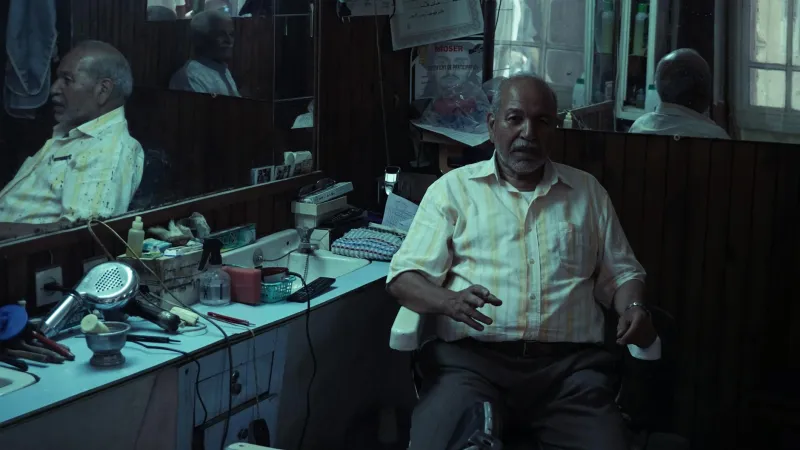
Every American town had its barbershops, usually clustered near the main commercial strip or tucked into residential neighborhoods. These weren't branded chains or Instagram-worthy spaces with exposed brick and craft beer on tap. They were functional, familiar places with spinning red-and-white poles, well-worn chairs, and walls lined with fading photographs of customers from decades past.
The barbershop served as an unofficial community center for men. It's where you'd hear about job openings, debate the latest baseball trades, or get the real story behind whatever was happening in town. The barber was part stylist, part therapist, part local historian — all for that same quarter.
Most men visited weekly or bi-weekly. It wasn't vanity; it was maintenance, like getting your shoes shined or your car washed. The styles were simpler too — a standard cut that looked professional and lasted until your next visit.
The Modern Grooming Revolution
Today's barbershop experience has been completely reimagined. What was once a quick, affordable necessity has evolved into a lifestyle choice with premium pricing to match. Modern shops offer elaborate services: beard sculpting, eyebrow trimming, scalp treatments, and styling consultations that can push your bill well over $100.
The average American man now spends about $154 per year on haircuts, according to industry surveys. That might sound reasonable until you realize it represents nearly four times what men spent proportionally in the 1950s when adjusted for wages.
Appointment booking has moved online, with apps sending reminders and allowing you to prepay and tip digitally. The spontaneous drop-in culture has largely disappeared, replaced by scheduled slots and waiting lists at popular shops.
What Changed Everything
Several factors transformed the humble haircut from an everyday expense into a considered purchase. The rise of unisex salons in the 1970s introduced men to higher-end grooming services and pricing models borrowed from women's beauty treatments.
Cultural shifts played a role too. As men's fashion became more diverse and style-conscious, simple maintenance cuts gave way to complex fades, intricate designs, and personalized styling. What barbers now call a "classic cut" requires more skill and time than the standard styles of previous generations.
Real estate costs have pushed many traditional barbershops out of affordable neighborhood locations. The shops that remain often occupy prime commercial space with rent to match, costs that inevitably get passed on to customers.
The Economics of Looking Good
Perhaps most telling is how haircuts have shifted from a working-class routine to something that requires budgeting. A construction worker in 1955 could afford a weekly trim without thinking twice. Today's construction worker earning $25 per hour might hesitate before booking that $50 appointment.
This pricing evolution reflects broader changes in American consumer culture. Services that were once standardized and affordable have been repositioned as premium experiences. The neighborhood barber who charged a quarter has been replaced by the "grooming specialist" who charges fifty dollars.
Looking Back
The transformation of the American barbershop reveals how dramatically our relationship with everyday services has changed. What was once a simple, affordable ritual embedded in community life has become an individualized consumer choice with a price tag to match.
Your grandfather's weekly 25-cent haircut came with more than just a trim — it came with a sense of place and routine that's harder to find today, even when you're willing to pay 180 times more for the privilege.