The Engine You Could Actually Understand — Before Your Car Started Keeping Secrets
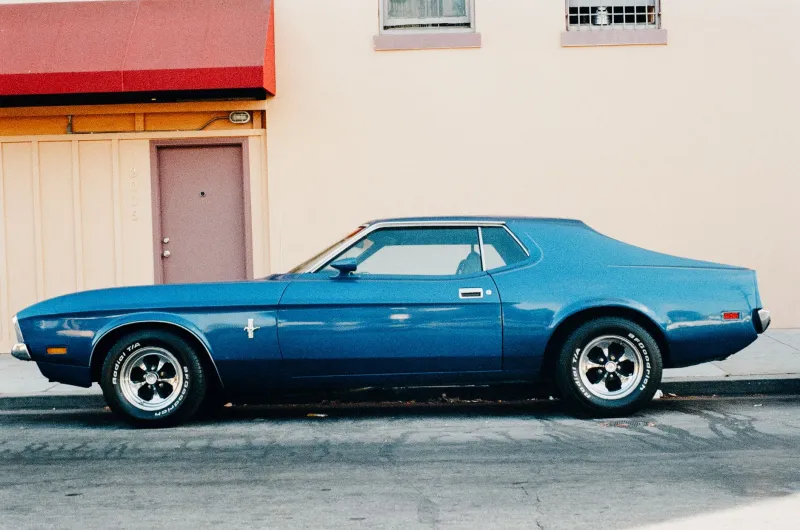
Somewhere in the back of your dad's garage, there's probably a Chilton manual. Maybe it's grease-stained on the corners, maybe a few pages are stuck together from a long-ago oil change that didn't quite go to plan. That book — thick, unglamorous, and completely practical — was once the most important thing a car owner could have. It assumed you'd use it. It assumed you could use it.
That assumption no longer applies.
Saturday Used to Mean Something Under the Hood
For most of the twentieth century, owning a car and maintaining a car were the same job. You didn't separate them. A guy who bought a '68 Mustang or a '74 Chevy pickup understood, at least in rough terms, how the thing worked. The carburetor, the distributor cap, the timing belt — these weren't mysteries reserved for specialists. They were components. Visible, reachable, and fixable with tools you could buy at Sears.
Weekend oil changes were practically a ritual. You'd drain the old stuff, swap the filter, pour in the new, and feel genuinely accomplished by noon. Brake pads? Doable. Spark plugs? Twenty minutes, maybe thirty if you were being careful. If something went wrong, you could often hear it, feel it, or at least locate it by looking. The engine bay had space in it — actual physical space where a human hand could reach.
There was a whole culture built around this. Teenagers learned to drive and learned to wrench at roughly the same time. Auto shop class wasn't a throwaway elective. Knowing how to change your own brakes was a point of quiet pride, the kind that doesn't need an audience.
Then the Computers Moved In
It didn't happen overnight, but the shift was decisive. Through the 1980s and especially the 1990s, electronics began doing what mechanical systems used to do. Fuel injection replaced carburetors. Electronic ignition replaced distributors. Onboard computers started managing everything from fuel mixture to transmission shifts to idle speed.
In fairness, the cars got better. They really did. Fuel efficiency improved, emissions dropped, and reliability climbed to levels that would've seemed impossible in 1975. A modern vehicle can run 200,000 miles with relatively modest care. Nobody misses the days of tuning carburetors in a parking lot because the car started running rough.
But something else happened alongside the improvement. The engine bay got crowded — not with parts you could identify and reach, but with sensors, modules, and sealed systems that communicate in a language your eyes can't read. The check engine light comes on and it tells you almost nothing. It's a notification without a message. To find out what it actually means, you need a diagnostic scanner plugged into a port under your dashboard, reading codes that translate into repair orders most people can't evaluate or challenge.
What a Wrench Used to Cost Versus What a Code Reader Costs Now
Here's where it gets personal. A basic set of hand tools in the 1970s — the kind that could get you through most routine maintenance — ran you maybe $50 to $100. Adjusted for inflation, that's still a manageable one-time investment. The knowledge required was learnable from a book, a neighbor, or a Saturday morning spent watching someone who knew what they were doing.
Today, professional-grade automotive diagnostic equipment starts around $2,000 and climbs fast. Dealerships have invested in proprietary software that independent shops can't always access. Some manufacturers have actively resisted right-to-repair legislation that would allow independent mechanics — let alone home mechanics — to access the same data the dealer sees. Your car generates information about itself constantly, and that information isn't always yours to read.
The result is a kind of enforced dependency. It's not that people got less capable. It's that the machines were redesigned in a way that made capability irrelevant. Even a trained mechanic with thirty years of experience needs the right software subscription to work on certain modern vehicles.
The Empowerment That Got Quietly Engineered Away
There's something worth sitting with here. The old model of car ownership carried a specific kind of confidence — the knowledge that if something went wrong, you had at least a fighting chance of understanding it. You weren't helpless. You weren't automatically dependent on someone else's schedule, someone else's diagnostic machine, and someone else's labor rate.
That confidence shaped how people related to their vehicles. A car wasn't just transportation. It was a machine you had a relationship with. You knew its quirks. You knew the sounds it made when it was happy and the sounds it made when it wasn't.
Now most of us know our cars the way we know our smartphones — as surfaces. We interact with the interface and trust that whatever's behind it is functioning. When it stops functioning, we hand it to someone else and wait.
Progress Doesn't Always Feel Like Progress
None of this is an argument for going back to unreliable cars with terrible emissions and brakes that faded on long downhill grades. Modern vehicles are genuinely remarkable machines, and the technology that makes them difficult to repair at home is often the same technology that makes them safe and efficient.
But it's worth acknowledging what was traded away. A generation of Americans grew up believing they could understand the machines in their lives — that complexity wasn't necessarily a barrier, just a challenge worth meeting. The driveway mechanic wasn't a romantic myth. He was real, and he existed because the machines allowed him to.
Somewhere between the Chilton manual and the check engine light, that version of ownership quietly disappeared. Most of us just kept driving.