Sunday Night Used to Be the End of Something — Now It's Just Anxiety With a Side of Email
Sunday night used to feel like something. Not dread exactly — more like the natural close of a chapter. Dinner was winding down. Maybe there was a TV show the whole family watched. The kids did whatever kids did in the hours before Monday, and the adults let the weekend settle around them like a blanket being pulled back. Work existed, sure. Monday was coming. But it wasn't here yet, and everyone understood that distinction.
Ask a mid-career American professional today how their Sunday evenings feel, and a very different picture emerges. A 2023 survey by the American Psychological Association found that work-related stress peaks on Sunday afternoons for a significant portion of the workforce — a phenomenon researchers have taken to calling "Sunday Scaries," a term that has become so recognizable it barely needs explaining anymore.
Something happened to the weekend. And it happened quietly enough that most of us accepted it before we fully understood what we were accepting.
When Clocking Out Actually Meant Something
For most of the 20th century, the end of the workday was a physical event. You left the building. That was it. There was no mechanism by which your boss could reach you at 9 p.m. on a Friday unless he drove to your house — which, outside of genuine emergencies, nobody did. The separation between work and home wasn't a policy or a cultural value that needed defending. It was simply a fact of the available technology.
Factory workers, office clerks, retail employees, tradespeople — the overwhelming majority of the American workforce operated in an environment where the job stayed at the job. Your home phone might ring occasionally with something urgent, but the expectation of constant availability was structurally impossible to enforce.
This wasn't a golden age without its own stresses. Long hours, dangerous conditions, and economic insecurity were real features of working life throughout the mid-20th century. But the temporal boundary between work and home was, for most people, intact. When you were home, you were home. That distinction had weight.
The Device That Moved Into Your Bedroom
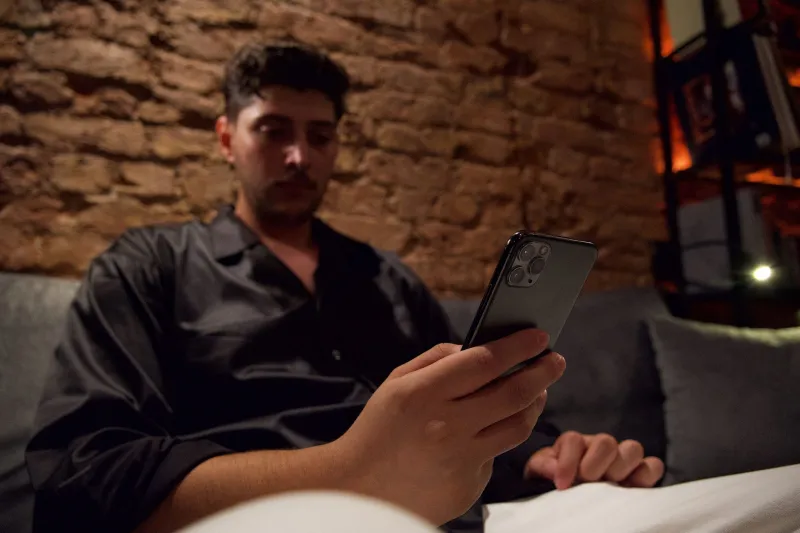
The erosion began with the pager, accelerated with the BlackBerry, and became essentially total with the smartphone. By 2023, the Pew Research Center reported that 76 percent of Americans check their phones within an hour of waking up, and a similar proportion check them within an hour of going to sleep. For professionals in knowledge-work industries, those numbers skew even higher.
The smartphone didn't just give employers a way to reach workers after hours. It created a new set of unspoken expectations that reshaped the entire culture of availability. When your manager sends an email at 8 p.m. and you respond by 8:15, you've established a precedent. When your colleague sends a Slack message on Saturday morning and you reply within the hour, you've set a floor. Nobody explicitly required this of you. But everyone noticed.
This is the particular cruelty of always-on culture: the pressure is largely invisible. There's no policy document that says you must respond to work messages on Sunday evening. There's just the ambient awareness that other people are responding, that the person who seems most available often seems most committed, and that in a competitive job market, the cost of appearing disengaged can feel very real.
What the Blurring Actually Costs
The research on this is not subtle. Chronic inability to psychologically detach from work — to genuinely stop thinking about job-related concerns during off-hours — is associated with significantly elevated rates of burnout, anxiety, and depression. A landmark study published in the Journal of Occupational Health Psychology found that workers who could not mentally disengage from work during evenings and weekends reported worse sleep quality, more emotional exhaustion, and lower overall life satisfaction than those who maintained clear mental boundaries.
And the costs aren't only psychological. Relationships suffer in ways that are harder to quantify but no less real. The partner who is physically present but mentally at their laptop. The parent who is at the soccer game but checking email from the sideline. The dinner conversation that gets interrupted by a work notification and never quite recovers its rhythm. These are small moments, individually. Accumulated over years, they shape the texture of a life.
A 2022 report from the nonprofit Mind Share Partners found that 76 percent of full-time U.S. workers reported at least one symptom of a mental health condition in the prior year — a figure that has trended steadily upward alongside the rise of remote and hybrid work arrangements that further blur the line between professional and personal space.
The Productivity Myth
Here's the argument that usually gets made in defense of always-on culture: it's efficient. The flexibility to work evenings and weekends means greater output, faster response times, more competitive businesses. And for some roles, in some contexts, that's genuinely true.
But the evidence for extended availability producing better work is surprisingly thin. Research from Stanford economist John Pencavel found that productivity per hour drops sharply after 50 hours of work per week — and falls off a cliff after 55. The marginal value of the Sunday night email check, the late-Friday Slack message, the vacation-day conference call, is often much lower than it feels in the moment. What it does produce reliably is the impression of dedication — which is a different thing from dedication itself, and a much worse basis for building a working life around.
What Getting Your Evenings Back Actually Looks Like
Some companies and countries have started pushing back. France's "right to disconnect" legislation, enacted in 2017, gives employees at companies with more than 50 workers a legal framework for ignoring after-hours communication. Several U.S. states have considered similar proposals, though none have passed comprehensive legislation as of this writing. Some forward-thinking employers have introduced "no email after 6 p.m." policies or designated communication-free weekends.
But structural change moves slowly. In the meantime, the reclamation of off-hours tends to happen one household at a time — a deliberate decision to leave the phone in another room, to resist the pull of the inbox, to let Sunday night be what it used to be before anyone thought to fill it.
That version of Sunday — quiet, unhurried, genuinely yours — still exists. It just requires a little more effort to get there than it used to.