The Lost Art of Strategic Communication: When Every Phone Call Was a Calculated Decision
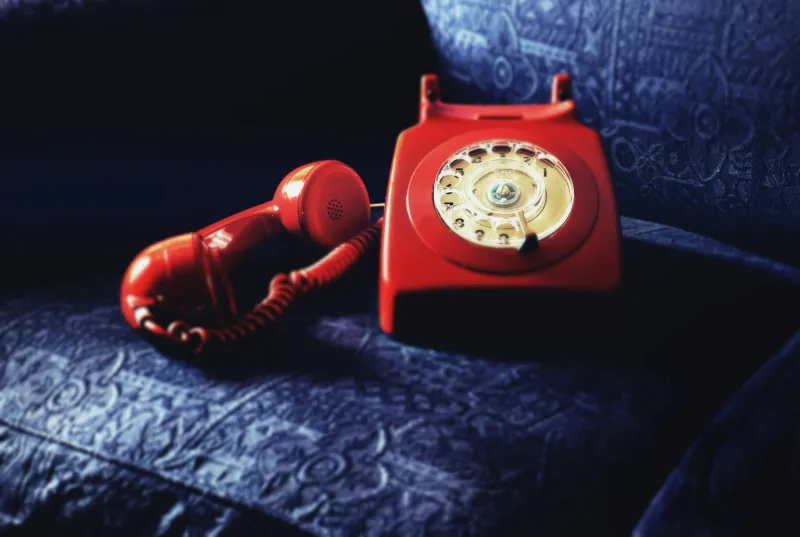
The Phone as Fortress
Imagine this: You want to call your friend across town to make weekend plans. But first, you need to check if anyone else in your house needs the phone, calculate whether it's peak calling hours, and prepare for the very real possibility that you'll spend the next thirty minutes listening to a busy signal. Welcome to the world of pre-cellular communication, where reaching someone was less about instant gratification and more about strategic warfare.
In the 1960s through 1980s, the family telephone wasn't just a communication device—it was the command center of household operations. Mounted on the kitchen wall with its coiled cord stretched to maximum capacity, it served as the single point of contact between your family and the outside world. And unlike today's pocket-sized computers disguised as phones, this device demanded respect, planning, and above all, patience.
The Busy Signal Blues
The busy signal wasn't just an inconvenience—it was a way of life. That rhythmic beep-beep-beep could stretch on for what felt like hours, and there was no way around it. No call waiting, no voicemail, no text message backup plan. If the person you were trying to reach was already on the phone, you had exactly two options: hang up and try again later, or camp out by your phone, hitting redial every few minutes like some sort of telecommunications gambler.
Teenagers became masters of timing, developing an almost supernatural ability to sense when their crush might be off the phone with their other friends. Parents would literally schedule important calls, marking their calendars with "Call Dr. Johnson at 2 PM" because they knew that narrow window might be their only shot at getting through.
Compare that to today, where being unreachable for more than a few hours feels almost antisocial. We've traded the busy signal for read receipts, and somehow managed to make communication both easier and more stressful at the same time.
Long Distance: The Ultimate Luxury
If calling across town required strategy, calling across state lines demanded a family budget meeting. Long-distance calls weren't just expensive—they were event-level expensive. Families would gather around the phone for out-of-state conversations, passing the receiver like it was made of gold, because in a very real sense, every minute was.
A ten-minute call to California could cost more than a family dinner out. Parents developed an almost military precision when it came to long-distance timing: "We'll call Grandma on Sunday at 11 AM when the rates drop, and we have exactly eight minutes to catch up on the entire year." Children learned to speak in bullet points, delivering news updates with the efficiency of a wartime radio operator.
Today, we video chat with friends in Tokyo while walking our dogs, barely registering that we're conducting what would have been a financially catastrophic conversation just forty years ago. The phrase "long distance relationship" used to refer primarily to your phone bill, not your heart.
Party Lines and Privacy Paradox
In rural areas and smaller towns, many families shared party lines—multiple households connected to the same telephone circuit. This meant that making a private phone call was about as realistic as having a private conversation in Grand Central Station. Neighbors could (and absolutely did) listen in on each other's conversations, creating a community surveillance network that would make modern social media seem quaint.
The etiquette around party lines was complex and unforgiving. You had to listen carefully before dialing to make sure the line wasn't already in use. Emergency calls took priority, but everything else was first-come, first-served. Some families developed elaborate systems of rings to identify which calls were actually for them, turning every phone call into a game of audio charades.
Contrast this with our current obsession with privacy settings and encrypted messaging. We've gone from a world where your neighbors could accidentally hear your dinner plans to one where we're shocked if our phones suggest a restaurant based on our location data.
The Ritual of Connection
Perhaps most remarkably, the difficulty of reaching someone made every successful connection feel meaningful. When you finally got through to your friend after an hour of busy signals, that conversation mattered in a way that our instant messages simply can't replicate. You didn't waste time on small talk when long-distance charges were ticking away like a taxi meter.
Families developed elaborate phone trees for spreading news, with designated callers responsible for reaching specific relatives. Getting engaged? Better clear your evening—you've got seventeen people to call, and each conversation needs to be timed perfectly to avoid peak rates.
The Always-On Anxiety
Today's teenagers can't imagine a world where being unreachable wasn't considered rude, but there was something liberating about the impossibility of constant contact. When you left the house, you were genuinely gone until you returned. No one expected immediate responses because immediate responses were physically impossible.
We've traded the frustration of busy signals for the anxiety of read receipts, the expense of long-distance calls for the expectation of constant availability. In gaining the ability to reach anyone, anywhere, anytime, we've lost something harder to quantify: the weight that communication used to carry when it required genuine effort.
The next time your call goes straight to voicemail and you feel that flash of annoyance, remember that your grandparents would have considered that level of connectivity pure science fiction. We've solved the technical challenges of human communication so completely that we've forgotten they ever existed—and maybe lost a little bit of the magic that made finally getting through feel like such a victory.