When Saturday Morning Was the Best Two Hours of the Week
When Saturday Morning Was the Best Two Hours of the Week
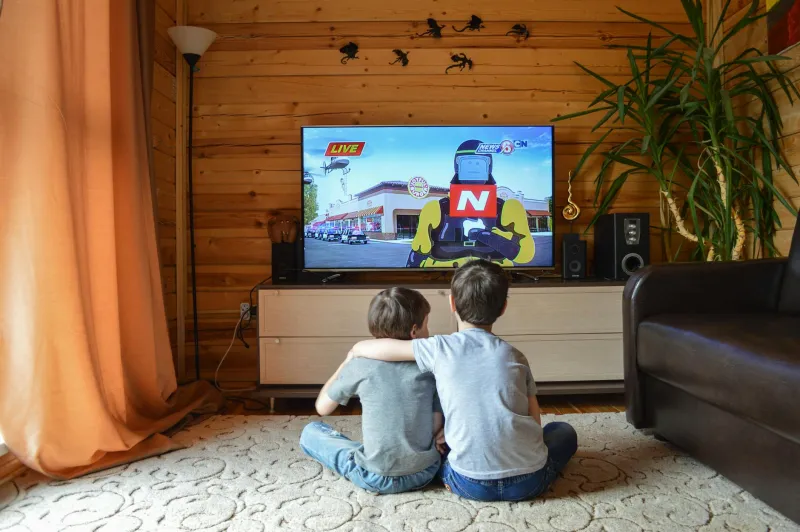
If you grew up in America between roughly 1970 and 1990, you already know exactly what Saturday morning felt like. You probably woke up earlier than you ever did on a school day — no alarm needed. You crept downstairs while the rest of the house was still quiet, poured yourself a bowl of something aggressively sugary, and planted yourself in front of the TV. And for the next two or three hours, the world was entirely yours.
Scooby-Doo. Super Friends. Bugs Bunny. The Smurfs. Schoolhouse Rock. He-Man. You watched them all with a focus and dedication that you probably never brought to actual schoolwork.
This was Saturday morning. And it was sacred.
The Programming Block That Defined a Generation
Saturday morning cartoons weren't an accident. They were a deliberate, highly competitive programming strategy developed by the major broadcast networks — ABC, NBC, and CBS — beginning in the late 1960s. Each fall, the networks would unveil their new Saturday morning lineup like it was a prime-time launch, complete with promotional specials and preview shows. Kids debated which network had the better schedule the way adults argued about football teams.
The block typically ran from around 7 or 8 a.m. until noon, after which regular adult programming resumed. That hard stop was part of what made it feel special. Saturday morning was finite. It had a beginning and an end. And because there were only three major networks and no on-demand options of any kind, every kid in your neighborhood was watching the same thing at the same time.
That shared experience mattered more than people realized at the time. Monday morning at school had a built-in conversation starter: Did you see what happened on Bugs Bunny? Everyone had. Of course they had. There was nothing else to watch.
The Cereal Was Part of the Experience
You can't talk about Saturday morning without talking about the cereal. The two were so intertwined that the cereal companies were among the biggest advertisers on children's television — which is exactly why Saturday morning programming was saturated with ads for Count Chocula, Cap'n Crunch, Cocoa Puffs, and Froot Loops.
For a lot of kids, Saturday morning was the one time they got to eat the fun cereal. Weekday breakfasts might mean Cheerios or toast. But Saturday had different rules. The bowl was bigger, the sugar content was higher, and nobody was in a rush.
Those cereal commercials were almost as anticipated as the cartoons themselves. Trix are for kids. They're gr-r-reat. Part of this complete breakfast. Generations of Americans absorbed these taglines before they were old enough to read a nutrition label — and the cereal companies knew exactly what they were doing.
After the Cartoons: The Unstructured Hours
Here's the part that looks most foreign to kids growing up today: once the cartoons ended around noon, there was no plan.
No afternoon activities. No scheduled playdates logged in a family calendar app. No enrichment classes, travel sports leagues, or structured programming waiting on the other side of lunch. You went outside — or you called a friend, or you rode your bike to wherever your friends happened to be — and you figured it out.
The concept of unstructured play, which child development researchers now talk about with some urgency as a thing American kids are losing, was simply called "Saturday afternoon" in 1978. Nobody had a word for it because it wasn't remarkable. It was just what happened.
Kids built things, broke things, wandered, argued, made up games, got bored, found something to do about the boredom, and came home when it started getting dark or when they heard their mom calling from the front porch. The day had a loose, unhurried quality that modern childhood schedules rarely allow.
What Saturday Morning Looks Like Now
The Saturday morning cartoon block, as a cultural institution, effectively ended in the mid-1990s. The Children's Television Act of 1990 required broadcast networks to air educational programming, which gradually replaced the entertainment-driven cartoon blocks. By the time cable channels like Cartoon Network and Nickelodeon were in full swing — offering cartoons literally around the clock — the idea of a dedicated Saturday window had lost its logic entirely.
Today, kids can watch whatever they want, whenever they want, on demand. YouTube, Netflix, Disney+, and a dozen other platforms serve up an essentially infinite menu of content. Waiting for a specific show at a specific time on a specific day is a concept that would need explaining to most children under twelve.
And Saturday itself is busier than it used to be. Youth sports leagues now schedule games on weekend mornings. Tutoring sessions, music lessons, and extracurricular activities fill in the gaps. American parents, responding to real anxieties about competitive college admissions and structured development, have packed their children's calendars in ways that would have seemed unusual — even excessive — to families in 1982.
Was Something Lost?
This is where it gets genuinely complicated. The old Saturday morning model had real limitations. The cartoons were often formulaic, the advertising was relentless and targeted at children who couldn't evaluate it critically, and the unstructured afternoons that followed weren't idyllic for every kid — some were lonely, some were unsupervised in ways that weren't always safe.
But the nostalgia that people aged 35 to 55 feel for that era isn't just sentimentality. It's a recognition that something specific existed then — a weekly ritual, shared across an entire generation, that belonged entirely to kids. No parental agenda. No educational outcome to optimize. Just two hours of cartoons and a bowl of cereal and a whole Saturday stretching out in front of you.
The world before you arrived had a different relationship with children's time. It was less curated, less monitored, and in some ways, less anxious. Whether that was better or just different probably depends on which side of 1990 your childhood fell on.