When the Evening News Was Your Window to the World — And That Window Opened Just Once a Day
When the Evening News Was Your Window to the World — And That Window Opened Just Once a Day
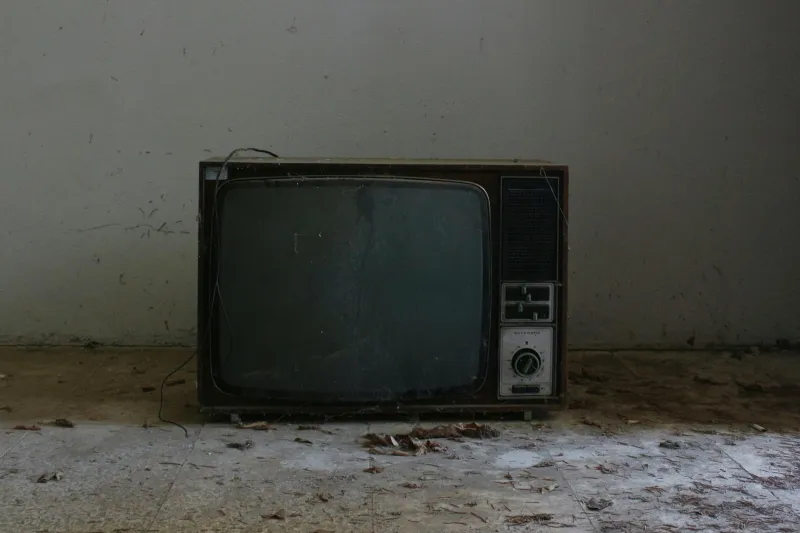
Picture this: It's 6 p.m. on a Tuesday evening in 1975. You're finishing dinner. Someone turns on the television, and Walter Cronkite appears on the screen. For the next 30 minutes, you learn what happened in the world that day. Vietnam. Watergate. The space program. International affairs. Sports. Weather. Then the broadcast ends. The window closes. You know what you're going to know until tomorrow morning, when the newspaper arrives on your doorstep.
This wasn't deprivation. It was the normal rhythm of information consumption for millions of Americans. News was something that happened at specific times, delivered by trusted authorities, presented in a digestible format. You couldn't know more than what had been selected as important. You couldn't refresh endlessly. You couldn't argue with strangers about it in real time.
Today, that entire structure has been inverted. You have access to more information about more events than any human in history. You can watch events unfold in real time. You can read analysis from dozens of perspectives within minutes. You can engage with news as it's happening, sharing reactions and arguments with thousands of people simultaneously.
And yet, something fundamental about how we experience the world has shifted in ways that aren't entirely clear as improvements.
The Architecture of Information
In the mid-twentieth century, information had a clear architecture. There were gatekeepers — editors, news directors, publishers — whose job was to decide what mattered and what didn't. They had financial incentives to get things right, because credibility was their only product.
These gatekeepers made choices about what stories to cover, how much time to devote to each, and how to frame them. This wasn't always perfect or unbiased, but it was intentional curation. The evening news was roughly 22 minutes of actual content (the rest was commercials). That meant every story had to be genuinely important to make the cut.
The newspaper had more space — maybe 40-60 stories per day — but still represented deliberate editorial choices. The front page conveyed what editors believed were the most important stories. The back pages covered less critical news. Readers understood this hierarchy.
This created a shared information environment. Most Americans watched the same evening news broadcast. They read newspapers from the same handful of major outlets. If something was important enough to lead the news, it was important. If it wasn't covered, it presumably wasn't significant.
The Newspaper on the Doorstep
The morning newspaper deserves special attention, because it represented something that no longer exists: delayed, thoughtful reporting.
News stories for the morning paper were often written overnight or early morning. Reporters had time to gather information, talk to multiple sources, and think about context. The paper itself took hours to print and distribute. By the time you read it, the story had been reported, edited, fact-checked, and contextually framed.
This meant that your morning news came with a built-in buffer. You weren't reading about events as they happened; you were reading about events as they had been understood and vetted by professionals. There was a natural distance between the event and your knowledge of it.
This distance had a psychological effect. You weren't as emotionally activated. You weren't as inclined to react instantly. You read the news, absorbed it, discussed it with colleagues at work, and moved on with your day. The news was important, but it wasn't intrusive.
The Evening Broadcast and the Trusted Anchor
The evening news broadcast was a ritual in American households. Families gathered around the television at 6 p.m. or 11 p.m., and Walter Cronkite, John Chancellor, or Dan Rather delivered the day's news with a tone of authority and gravitas.
These anchors became trusted figures. Cronkite was "the most trusted man in America," and that wasn't marketing hyperbole — polls actually confirmed it. People believed what these anchors said because they had proven themselves reliable over years. They weren't cheerleaders or ideologues; they were professionals delivering information.
The broadcast had a clear structure. International news first, usually. Then domestic politics. Then human interest stories. Then sports. Then weather. The structure itself communicated what mattered most. You knew where to expect certain types of information.
Crucially, the broadcast ended. At 6:30 p.m. or 11:30 p.m., it was over. You had received your news for the day. You could turn off the television and do something else.
The Newsmagazine
For deeper analysis, there were weekly newsmagazines — Time, Newsweek, U.S. News & World Report. These appeared in your mailbox once a week and offered something fundamentally different from daily news.
They had time to report deeply, to provide context, to explain not just what happened but why it mattered. A newsmagazine cover story might be 5,000-8,000 words exploring a single topic in depth. By the time you read it, the immediate news cycle had moved on, but you understood the issue more completely.
These magazines also had the advantage of being static. You read them at your leisure. They didn't demand constant attention. They didn't update. They represented a complete thought, fully formed.
The Shift to Constant Information
The first major shift came with 24-hour cable news, beginning in the 1980s with CNN. Suddenly, there was no end to the news cycle. Something important could happen at any time, and you could watch coverage immediately.
This was presented as an improvement — more information, faster delivery, constant updates. And in some ways it was. When genuinely important events occurred (the Challenger disaster, the fall of the Berlin Wall, the Gulf War), being able to watch them unfold in real time was remarkable.
But it also changed the experience fundamentally. News was no longer something that happened at scheduled times. It was always available. If you wanted to know what was happening, you could turn on the television at any hour. If you didn't, you might miss something important.
This created a new form of anxiety. You were now responsible for managing information rather than having it managed for you. You had to decide when to check the news, which channels to trust, how much time to devote to staying informed.
The Internet and the Infinite News Cycle
The internet accelerated and fragmented this process exponentially. Now, not only was news constant, but it was infinite. Thousands of outlets, each with their own perspective and incentives. No gatekeepers. No shared consensus about what mattered.
News became algorithmic. Instead of editors deciding what you saw, algorithms decided based on engagement. Stories that provoked strong reactions — anger, fear, outrage — rose to the top. Nuance and context didn't drive engagement. Conflict did.
The speed accelerated. A story could break, spread, be debunked, and be replaced with something new in the span of hours. By the time you understood one news cycle, three more had passed.
And the responsibility shifted entirely to you. You had to curate your own information environment. You had to decide which sources to trust. You had to fact-check. You had to synthesize information from dozens of sources. The professional gatekeepers had been removed, and you were expected to do their job yourself.
What's Been Lost
The shared information environment is perhaps what's been lost most completely. In 1975, most Americans had a baseline understanding of major events because they all consumed roughly the same news sources. You might have disagreed about what it meant, but you at least agreed on what had happened.
Today, different Americans can inhabit completely different information environments. You might be following one set of news sources; someone else might be following an entirely different set. You might not even agree on what events are significant.
The authority of expertise has been undermined. In 1975, a journalist or an editor was trusted because they had demonstrated competence over time. Today, anyone can claim expertise online. The difference between a professional reporter and a confident amateur is invisible in the digital environment.
The pace has become genuinely harmful. The constant stream of news creates a perpetual state of low-level anxiety. There's always something happening. There's always a crisis. There's always something you should be paying attention to. The psychological effect is exhaustion.
What's Been Gained
Obviously, you have access to vastly more information. If you want to understand an issue deeply, you can find expert analysis, primary sources, international perspectives, and dissenting viewpoints within minutes. That's genuinely valuable.
Breaking news is more immediate. When something genuinely important happens, you know about it right away, not hours or days later. That can matter.
You're not dependent on the biases of a small number of gatekeepers. If you're willing to do the work, you can construct a more complete picture of events than you could when Walter Cronkite decided what was important.
But the trade-offs are real. You've traded curated, edited, professionally-vetted information for immediate, infinite, algorithm-driven information. You've traded the comfort of trusting authorities for the burden of evaluating everything yourself. You've traded a shared information environment for fragmented, personalized bubbles.
The Psychological Toll
What's striking when you talk to people who came of age before the digital news era is how differently they relate to current events. They seem calmer. Less perpetually activated. More able to distinguish between what's immediately urgent and what merely feels urgent.
They also seem to have a clearer sense of what they actually need to know versus what's just noise. They're comfortable not knowing every detail of every developing situation. That comfort seems like a luxury now.
Your grandparents could read the morning paper, watch the evening news, and feel adequately informed. The structure of information was clear. The workday wasn't interrupted by notification pings about breaking news. The evening was free for other things.
You have access to vastly more information, but less peace. You're constantly aware of what's happening, constantly stimulated, constantly expected to have opinions about events you may not fully understand.
The question isn't whether constant information is better or worse than scheduled information — it's whether the trade-offs we've made have actually served us well. More information, it turns out, doesn't automatically make you feel more informed. Sometimes it just makes you feel more overwhelmed.