A Dollar Could Buy Your Whole Night Out at the Movies — And Then Some
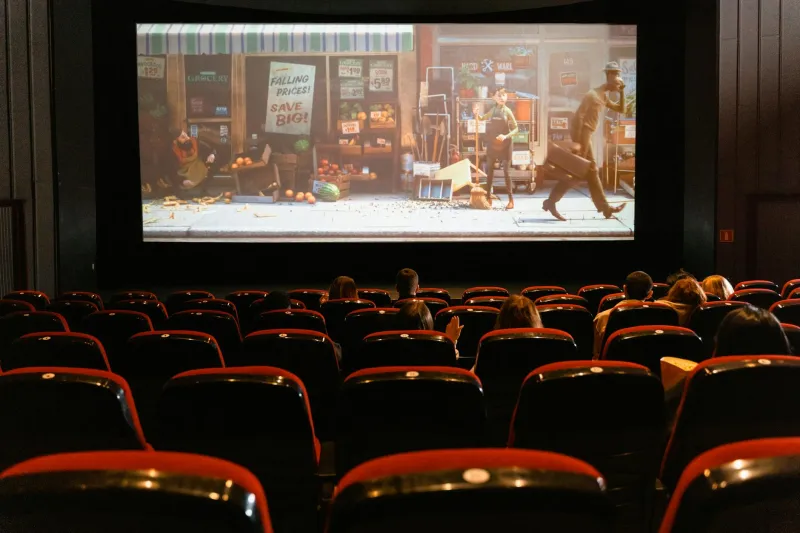
A Dollar Could Buy Your Whole Night Out at the Movies — And Then Some
Imagine walking up to a movie theater box office with a dollar bill in your pocket and feeling genuinely wealthy. That wasn't a fantasy in 1955 — it was a normal Friday night for millions of American teenagers and young families. A movie ticket cost about 50 cents. Popcorn and a drink ran you another quarter or so. You'd watch a double feature — two full-length films back-to-back — plus cartoons, newsreels, and previews of coming attractions. And you'd walk out with change in your pocket.
Today, that same dollar wouldn't cover a single ticket in most American cities. The median price of a movie ticket in 2024 hovers around $11, with premium formats and major markets pushing well past $20. A small popcorn and drink combo can easily exceed $15. The evening that once represented accessible entertainment for working people has quietly transformed into a discretionary luxury — something you plan for, budget for, and increasingly, skip in favor of staying home.
But the price difference tells only part of the story. What's really changed is the entire ritual of moviegoing itself, and with it, what the movies meant to American culture.
When the Theater Was the Destination
The neighborhood movie palace of the 1950s and 60s wasn't just a place to watch a film. It was a social institution — a climate-controlled refuge in summer, a warm gathering spot in winter, and the primary form of entertainment for families and couples who had limited options. Going to the movies was an event, not a transaction.
These theaters were architectural statements. They featured ornate lobbies, plush seating, and an atmosphere of occasion. Ushers in uniforms helped you find your seat. The experience began the moment you walked through the doors, not when the lights dimmed. For the price of admission, you received not just content, but an experience of being somewhere special.
The double feature was standard. You arrived not knowing exactly when you'd leave, and that uncertainty was part of the appeal. There was no checking your phone, no calculating whether you were getting your money's worth per minute of entertainment. You simply went to the movies and let the evening unfold.
The Economics of Abundance
What made this affordable abundance possible? Several converging factors that no longer exist.
First, movie tickets weren't the primary revenue source for studios. The real money came from the studios' ownership of vast theater chains, which gave them control over both the content and the venue. Ticket prices could remain low because the system was vertically integrated and wildly profitable at scale.
Second, competition was different. There were far fewer entertainment options. Television existed, but it was limited. There was no streaming, no video games, no internet. The movie theater faced competition from other theaters showing other films, but not from infinite entertainment alternatives available at home for a monthly subscription fee.
Third, labor costs and operational expenses were simply lower. Theaters didn't need to offer stadium seating, reserved seats, or premium formats. They operated on thinner margins but with higher volume and lower overhead.
Most importantly, moviegoing was a necessity in the entertainment ecosystem, not a luxury. Studios needed people in theaters because that's where movies made their money. Today, studios are increasingly indifferent about whether you see their films in theaters at all — many expect a film to perform well on streaming platforms within months of theatrical release.
What Happened to the Drive-In?
The drive-in theater represents perhaps the starkest casualty of this transformation. In the 1950s and 60s, drive-ins were where families went together, where teenagers went on dates, where the very concept of casual, affordable entertainment thrived. You could bring your own snacks. The experience was intimate and communal all at once.
Drive-ins peaked in the 1950s with nearly 5,000 locations across America. Today, fewer than 300 remain. They couldn't compete with multiplexes, which couldn't compete with streaming, and the land they occupied became far too valuable for entertainment purposes.
The Modern Theater Experience
Today's moviegoing is a fundamentally different transaction. Premium formats — IMAX, 3D, Dolby Cinema — command higher prices. Reserved seating means you're not just buying admission; you're buying a specific seat, often weeks in advance. Concessions have become a profit center so aggressive that the popcorn markup would shock customers if they thought about it too carefully. A small popcorn costs roughly $8 and yields a profit margin that would make most retail businesses blush.
The theater itself has become stratified. Luxury chains offer recliners, alcohol service, and gourmet snacks — creating a two-tier system where a genuinely premium experience exists for those willing to pay $25-30 per ticket. Meanwhile, standard theaters feel increasingly utilitarian by comparison.
Streaming has changed the entire calculus. Movies that once required a theatrical experience now arrive at home within weeks or months. The theatrical window — the exclusive period when a film plays only in theaters — has shrunk dramatically. For many viewers, especially younger ones, "going to the movies" has become something you do for tentpole events, not regular entertainment.
The Generational Shift
What's perhaps most striking is how completely the cultural expectation has shifted. For your grandparents, a movie ticket was an impulse purchase — something you decided to do on a Friday afternoon and acted on within hours. For many people today, it's a planned event that requires checking reviews, comparing showtimes, and making a conscious decision that it's worth the expense.
The communal aspect has fragmented. Your grandparents might have run into neighbors at the theater. They'd discuss the film afterward at work or at church. Movies were a shared cultural reference point because nearly everyone went regularly.
Today, with so many ways to consume content, that shared experience has diffused. A film might be a cultural event or it might be something you catch on a streaming service months later. There's no longer a single point where Americans converge to experience entertainment together.
What's Been Lost and Gained
The affordability is what's most obviously gone. A family of four can no longer casually decide to catch a movie. It's a $60-80 commitment before concessions. That's a significant expense, one that makes you evaluate whether it's truly worth it.
What's been gained is choice — an almost incomprehensible abundance of content available instantly and cheaply at home. The trade-off is real: lower prices and more options, but less occasion, less community, and less of the ritual that once made moviegoing special.
Your grandparents lived in a world where entertainment was scarce and therefore valuable. You live in a world where entertainment is infinite and therefore requires deliberate curation. The movie theater hasn't disappeared, but it's been fundamentally repositioned — from a necessity to a luxury, from an ordinary Friday night to an occasion worth planning for.
That dollar in your pocket? It won't get you through the lobby door anymore. But your grandparents would probably be more stunned by what you can watch at home for the price of a single ticket than by how much tickets have risen.