The Golden Ticket to Everything
Walk into any American library today and you'll find a peaceful sanctuary filled with books, hushed conversations, and maybe a few people using the computers. But step back forty years, and you would have discovered something entirely different: a bustling hub of activity where your library card was quite literally the most valuable thing in your wallet.
Back then, libraries weren't just about borrowing books. They were America's great equalizer, the one place where anyone — regardless of income, education, or social status — could access virtually everything they needed to improve their lives.
The Research Command Center
Before Google existed, the library reference desk was where Americans went to find answers to life's big and small questions. Need to research a medical condition? The library had medical journals and health encyclopedias. Planning a vacation? Travel guides and maps lined the shelves. Looking for a recipe for your dinner party? The cookbook section had you covered.
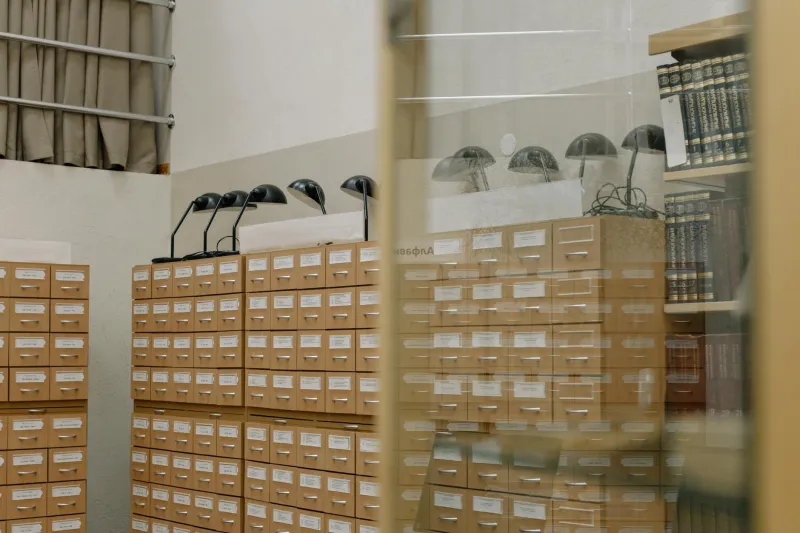
Librarians weren't just book organizers — they were information specialists who could guide you through the Dewey Decimal system to find exactly what you needed. They knew which periodical index would help you locate that magazine article from three years ago, and they could teach you how to use the microfilm machine to read old newspaper archives.
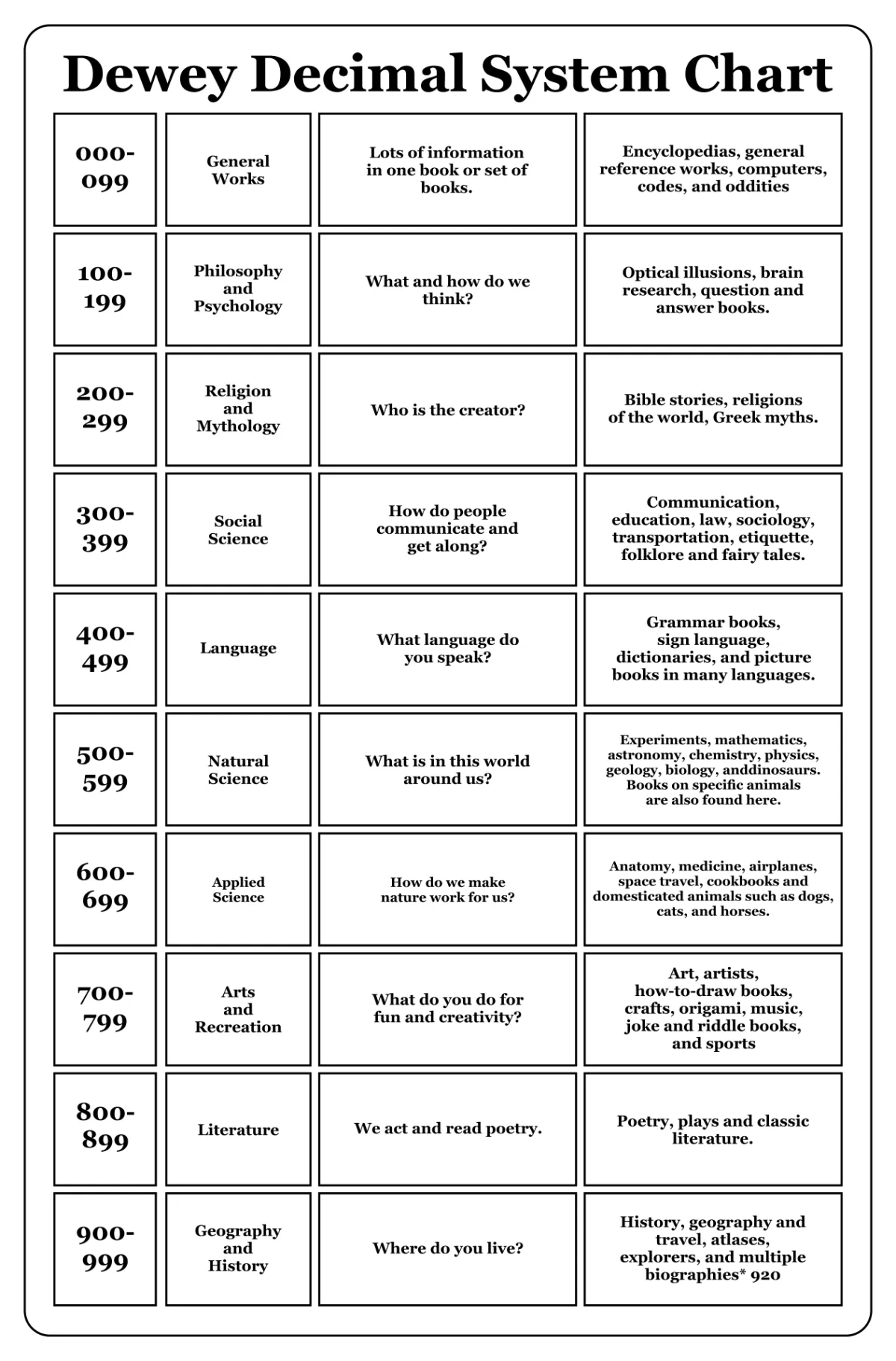 Photo: Dewey Decimal system, via www.printablee.com
The reference section was like having Wikipedia, but with expert human guides who actually cared whether you found what you were looking for.
Job Hunting Headquarters
For millions of Americans, the library was their primary job search tool. The classified ads from newspapers across the region were available every morning. Career guides explained how to write resumes and cover letters. Industry directories helped you identify potential employers.
Many libraries even had typewriters you could use to prepare your application materials. Some offered interview preparation workshops and resume writing classes. Your library card was essentially your gateway to career advancement, no subscription fees required.
Entertainment Without the Monthly Bill
Long before Netflix and Spotify, libraries were America's original entertainment subscription service — except it was completely free. Most libraries had extensive collections of vinyl records, cassette tapes, and later CDs. You could check out everything from classical symphonies to the latest pop albums.
Many libraries also loaned out 16mm films and later VHS tapes. Family movie night often started with a trip to the library's media section. Art books, photography collections, and coffee table books provided visual entertainment that today costs hundreds of dollars to own.
The Community Living Room
Libraries served as informal community centers where neighbors actually met each other. Story time brought families together. Study groups formed naturally in the quiet reading rooms. Senior citizens gathered for book clubs and discussion groups.
The library bulletin board was like a physical version of social media — advertising local events, garage sales, tutoring services, and roommate searches. It was where you learned what was happening in your neighborhood.
What Changed Everything
The internet didn't just supplement libraries — it fundamentally altered their role in American life. Suddenly, research that once required a trip to the library could be done from home in seconds. Job listings moved online. Entertainment became streamable. Even social connections migrated to digital platforms.
Today's libraries have adapted admirably, offering computer access, digital literacy classes, and maker spaces. But they've lost their position as the essential hub of information and community life.
The Hidden Cost of Convenience
What we gained in convenience, we may have lost in something harder to measure. The library was a place where information came with human guidance, where research required patience and critical thinking, and where community happened naturally through shared physical space.
Now we have instant access to infinite information, but we pay for it through dozens of monthly subscriptions, targeted advertising, and algorithm-driven content bubbles. The library's promise of free, unbiased access to knowledge seems almost quaint in an era where information itself has become a commodity.
The Quiet Revolution
Perhaps most significantly, the shift from libraries to search engines changed how Americans learn and think. Library research taught patience, discernment, and the ability to synthesize information from multiple sources. It required planning and intentionality.
Today's instant access is undeniably convenient, but it's also fragmented, commercialized, and overwhelming. The library card that once unlocked everything has been replaced by a dozen different passwords, subscriptions, and platforms — each designed to capture and monetize our attention.
Your local library is still there, still serving its community with dedication and purpose. But it's no longer the beating heart of American information life it once was. That simple library card, once the most powerful thing in your wallet, now feels like a gentle reminder of a time when knowledge was truly free and community was built one shared resource at a time.