The $15 Birthday Party That Made Kids Happier Than Today's $500 Extravaganzas
Walk into any suburban home on a Saturday afternoon in 1978, and you might stumble into the kind of birthday party that would make today's Pinterest-obsessed parents break out in hives. Paper plates from the grocery store. A slightly lopsided homemade cake. Kids running around the backyard with absolutely zero professional entertainment in sight.
Yet ask any adult who experienced these bare-bones celebrations, and they'll tell you about birthday parties they still remember decades later—not because of elaborate themes or expensive entertainment, but because of the pure, unfiltered joy that somehow emerged from the simplicity.
When Less Was Actually More
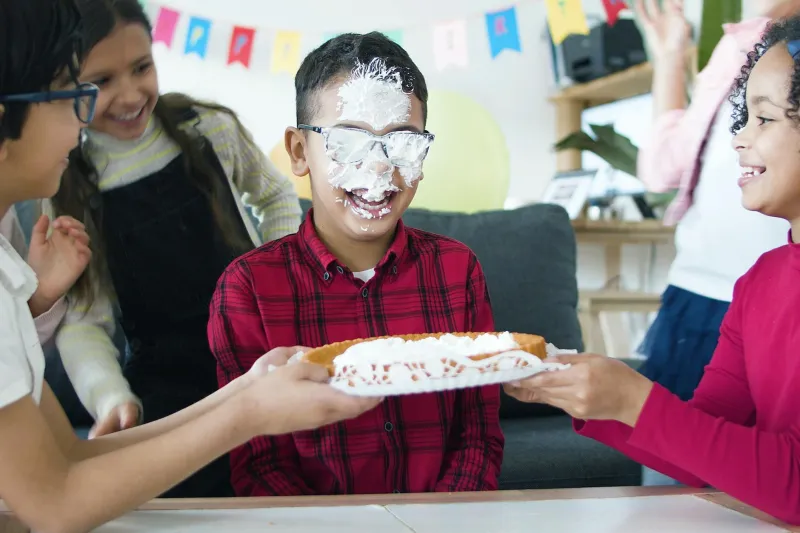
The typical birthday party in the 1970s and 80s operated on a budget that would barely cover today's party favors. A mother might spend $10 to $20 total: a box cake mix, frosting, ice cream, some balloons from the five-and-dime, and maybe a pack of party hats. The entertainment came from classic games that cost nothing but imagination—musical chairs, freeze dance, and the eternal favorite, pin the tail on the donkey.
Invitations were handwritten or, if the family was feeling fancy, filled out on store-bought cards that came in packs of eight. The guest list was limited by practical considerations: how many kids could reasonably fit in your living room or backyard, not by social politics or venue capacity.
The birthday child might receive five or six gifts, often handmade or carefully chosen from the toy aisle at Woolworth's. A new board game, a book, or a small toy was cause for genuine excitement, not disappointment that it wasn't the latest electronic gadget.
The Pinterest Pressure Cooker
Fast-forward to today, and the children's birthday party has evolved into something resembling a small-scale festival production. The average American family now spends between $300 and $500 on a child's birthday party, with many pushing well into four-figure territory for elaborate themed events.
Modern birthday parties often feature professional entertainers, custom decorations, elaborate themed cakes from specialty bakeries, coordinated party favors, and venues rented specifically for the occasion. Pinterest boards overflow with DIY projects that require advanced crafting skills and significant time investments. The pressure to create an "Instagram-worthy" celebration has transformed what was once a simple family tradition into a complex logistical operation.
Parents now scout venues months in advance, coordinate with multiple vendors, and stress about everything from matching napkins to party favor bag contents. The birthday child's wish list might include items costing more than entire parties used to cost, creating financial pressure that previous generations rarely experienced.
The Happiness Paradox
Here's the puzzling part: despite all this additional investment, research suggests that today's elaborately planned parties don't necessarily create happier memories or more satisfied children. Child psychologists note that overstimulation from too many activities, gifts, and options can actually decrease enjoyment and create anxiety rather than joy.
The simple parties of previous decades succeeded because they focused on what actually matters to children: unstructured play time with friends, the excitement of being celebrated, and the anticipation that comes with modest expectations exceeded rather than elaborate expectations barely met.
Kids from the simpler party era often recall specific moments: the taste of their mother's homemade cake, the laughter during a particularly competitive game of musical chairs, or the thrill of successfully pinning the tail in roughly the right location. These sensory memories, uncluttered by overwhelming stimuli, seem to stick in ways that today's more elaborate productions sometimes don't.
The Social Media Effect
One crucial difference between then and now is the audience. Birthday parties in the 1970s and 80s were private family affairs, attended only by the invited children and maybe a few parents who stayed to help. There was no documentation beyond perhaps a few snapshots with the family camera, and certainly no pressure to create content for social media.
Today's parties are often planned with an invisible audience in mind—the parents' social media networks who will see the photos and videos. This external pressure influences everything from decoration choices to activity planning, shifting focus from the child's actual preferences to what will photograph well and impress other adults.
The birthday child, who once was simply excited to have friends over to play, now might feel pressure to perform for cameras or live up to elaborate party themes they didn't choose. The spontaneous joy of childhood celebration gets choreographed into something more polished but potentially less authentic.
The Economics of Childhood Joy
The financial implications of party inflation extend beyond individual families. Parents now feel pressure to reciprocate elaborate celebrations, creating a kind of arms race of birthday party one-upmanship. Families who can't afford elaborate parties may feel embarrassed or worry that their children will be disappointed by simpler celebrations.
This economic pressure particularly affects working-class families, who once could easily host memorable birthday parties but now might struggle to meet current expectations. The democratization of childhood celebration has been replaced by a system where economic resources increasingly determine the quality of a child's birthday experience.
Finding the Sweet Spot
Some families are pushing back against party inflation, returning to simpler celebrations that prioritize connection over production values. These "old-school" parties often surprise parents with how much kids enjoy basic activities like scavenger hunts, relay races, and group games that require nothing but space and imagination.
The most successful birthday parties, whether simple or elaborate, seem to share common elements: they focus on the birthday child's actual interests rather than trendy themes, they provide opportunities for unstructured play, and they create an atmosphere of celebration without overwhelming stimulation.
The Gift of Good Enough
Perhaps the real lesson from those $15 birthday parties isn't that we should return to paper plates and boxed cake mix, but that we should remember what made them work: the understanding that childhood joy doesn't require professional production. Sometimes the most precious gift we can give our children is the confidence that they're worth celebrating, regardless of the budget or Pinterest-worthiness of the party we throw.
In our effort to give our kids "the best," we might have lost sight of what that actually means. Those lopsided homemade cakes and chaotic backyard games weren't compromises—they were celebrations of the idea that love, attention, and a few friends gathered together are still the only ingredients that really matter for a happy birthday.