Buckle Up — Or Don't: What a Cross-Country Drive Actually Looked Like in 1965
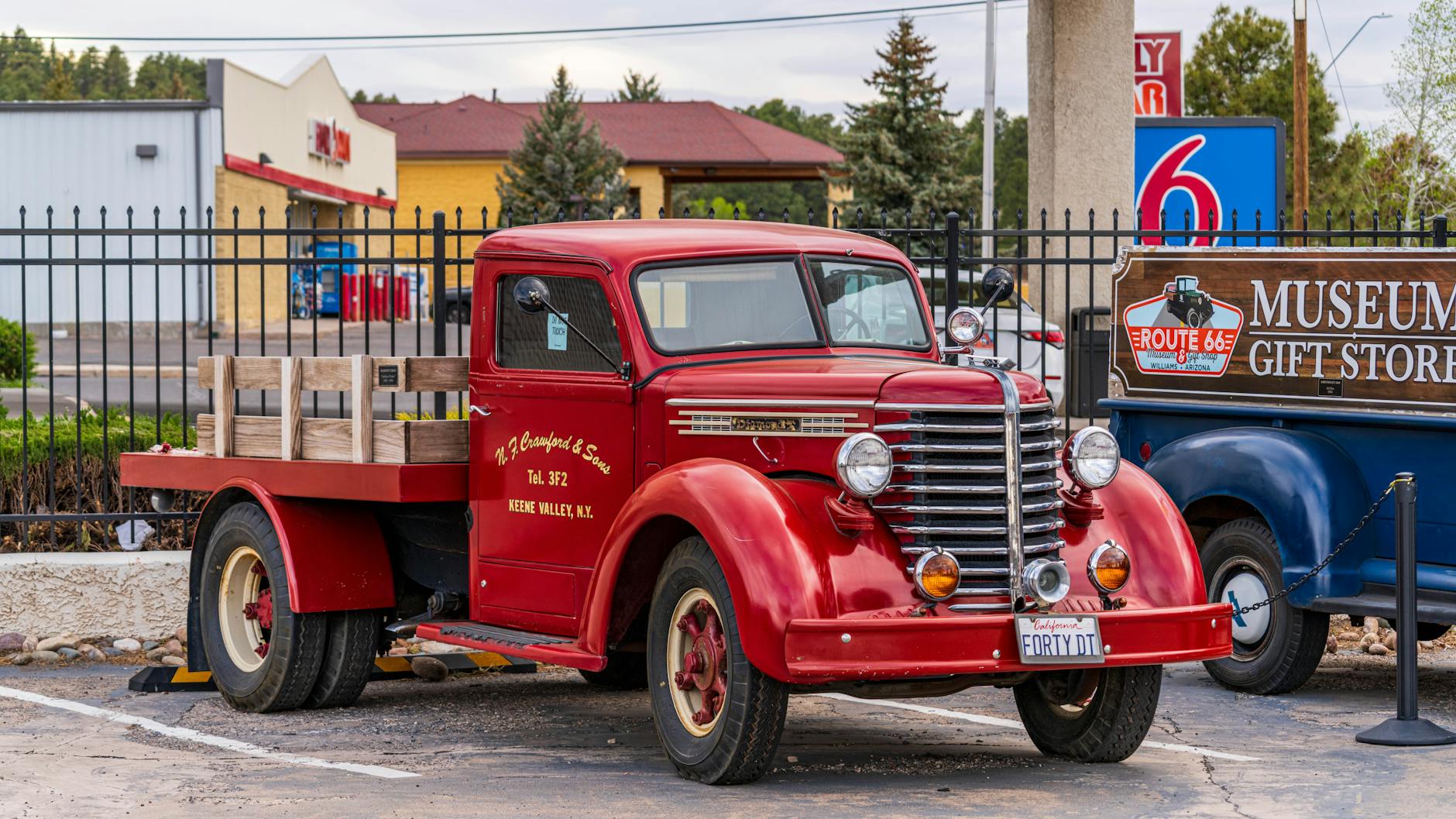
Buckle Up — Or Don't: What a Cross-Country Drive Actually Looked Like in 1965
There's something almost mythological about the American road trip. The open highway, the horizon stretching out ahead, the sense that the whole country is yours to move through at whatever speed feels right. That feeling hasn't gone away. But just about everything else surrounding it has changed beyond recognition.
If you'd climbed behind the wheel in the summer of 1965 for a cross-country haul — say, Chicago to Los Angeles along the iconic Route 66 — you'd have been doing something that looked superficially like what road-trippers do today. Same basic premise. Radically different experience.
The Car You Were Driving (And What It Couldn't Do)
In 1965, the average American car was a mechanical marvel by the standards of its time and an absolute death trap by the standards of ours. There were no mandatory seatbelts in most states — the first federal law requiring them to be installed (not even worn, just installed) didn't come until 1968. Actual enforcement of wearing them didn't arrive until New York passed the first mandatory use law in 1984.
Crumple zones? Airbags? Anti-lock brakes? None of it existed in production vehicles. The steering column was a rigid metal spike pointed directly at your chest. Dashboard padding was optional. If you got into a serious accident in 1965, the car was not designed to protect you — it was designed to get you there if nothing went wrong.
And yet, people drove everywhere. Long distances, fast, without a second thought.
Gas cost around 31 cents a gallon. That's roughly $3.00 in today's money — so not wildly different in adjusted terms, though today's national average hovers closer to $3.40–$3.60 depending on where you are and when you're filling up. The difference is that 1965 cars got maybe 15 miles per gallon on a good day, so you were stopping more often regardless.
Navigation Was a Full-Time Job
There was no Google Maps. There was no GPS. There was a paper map — hopefully a good one — and the quiet optimism that the road signs would cooperate.
Before a big trip, you might have stopped into your local AAA office to pick up a "TripTik," a custom-made spiral-bound booklet of your route, hand-annotated by a AAA employee. It was genuinely useful. It was also about as real-time as a history textbook.
Getting lost was not an edge case. It was part of the deal. You'd pull over, unfold a map the size of a dining table, and figure it out. Or you'd stop at a gas station and ask someone. Human beings gave each other directions using landmarks. "Turn left at the old grain silo" was a legitimate navigational instruction.
Today, your phone reroutes you around traffic before you've even noticed it. It knows about the accident three miles ahead. It knows the Chipotle on your right closes in 20 minutes. The margin for getting genuinely, hopelessly lost has essentially collapsed.
Where You Slept and What You Ate
Route 66 was lined with independently owned motels — the neon-signed, single-story kind that showed up in postcards and road-trip folklore. Some were charming. Some were genuinely grim. There was no Yelp, no TripAdvisor, no way to read 340 reviews before you pulled in. You made a judgment call based on the look of the parking lot and whether the vacancy sign was lit.
The same went for food. Roadside diners, truck stops, drive-ins. Cash only, usually. Credit cards existed but weren't universally accepted — and certainly not by the kind of places that existed in small-town America in 1965. You traveled with a wallet full of bills and hoped you'd planned accordingly.
The food itself was... of its era. Meat, potatoes, pie. Nothing wrong with that. But the idea of pulling off the interstate and finding a grain bowl, a cold brew, or a vegan wrap? Completely unimaginable.
Today, major rest stops along interstates like I-40 (which largely replaced Route 66) have Starbucks, Subway, Cinnabon, and sometimes sit-down restaurants. You can pre-order on your phone before you even exit the highway. It's efficient. It's consistent. It lacks a certain something.
The Honest Scorecard
Here's the thing about nostalgia: it tends to airbrush out the parts that were just bad. The romance of the 1965 road trip is real, but so is the fact that traffic fatalities in the United States peaked at over 54,000 deaths in 1972. Today, with far more cars on the road and far more miles driven, that number sits around 40,000 — still too many, but a meaningful improvement driven almost entirely by safety technology and regulation.
The spontaneity was real. The freedom was real. The sense of discovery was real.
But so was the danger. So was the uncertainty. So was the very genuine possibility that a bad turn, a mechanical failure, or a moment of inattention could end the trip in ways that modern safety systems might have prevented.
The American road trip is still one of the great ways to experience this country. The highway is still there. The horizon still delivers. But the world you're moving through — the tools you carry, the car protecting you, the information available at your fingertips — is so thoroughly transformed that a traveler from 1965 would barely recognize the experience.
Same road. Completely different journey.