You Could Drive Coast to Coast in 1960 — But It Was Nothing Like Today
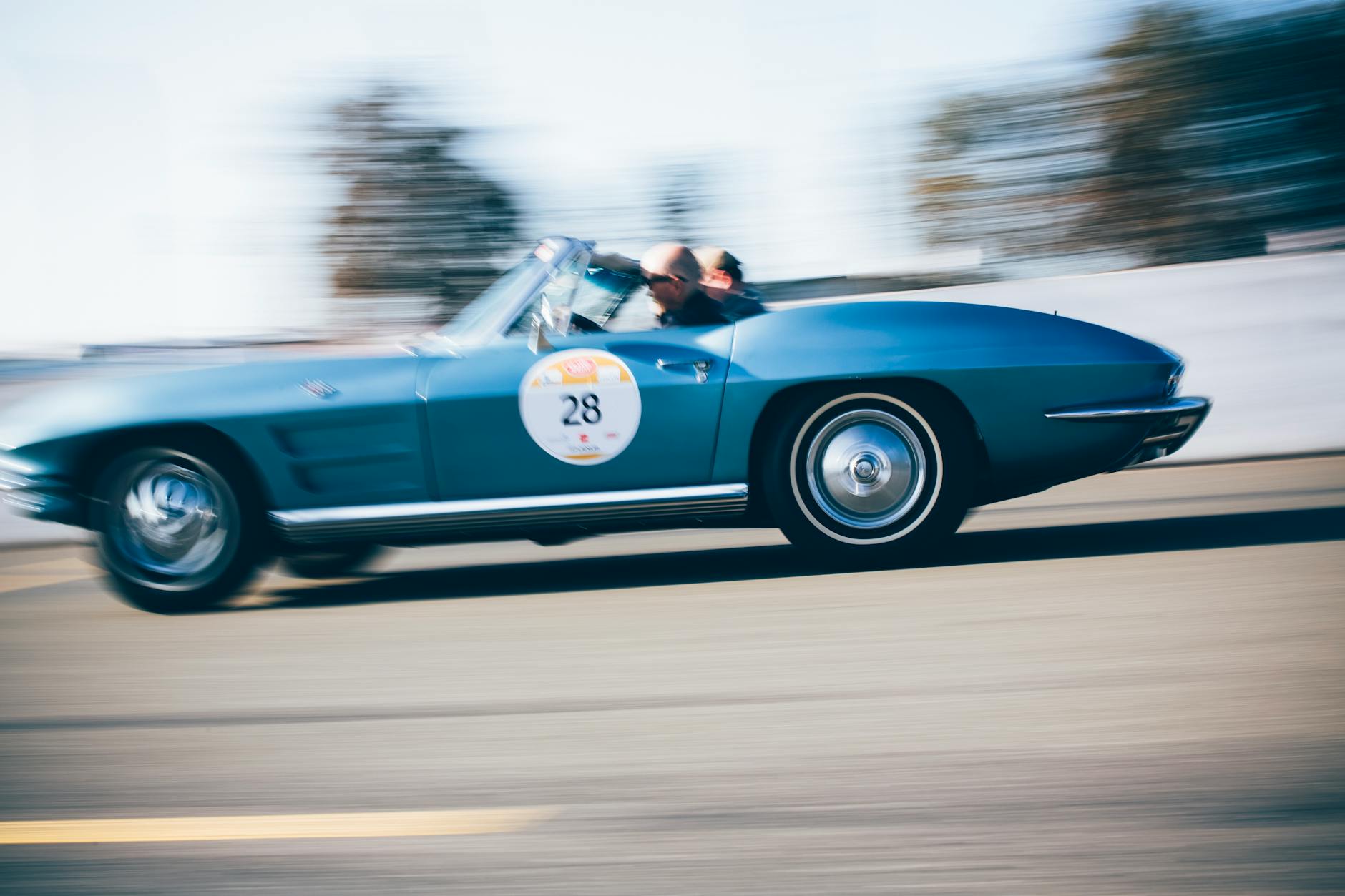
You Could Drive Coast to Coast in 1960 — But It Was Nothing Like Today
There's something romantic about the idea of a classic American road trip. Wide open highways, roadside diners, the country unfolding through your windshield. But if you actually climbed into a car in 1960 and pointed it toward Los Angeles from New York City, the reality was a whole lot more complicated — and a whole lot more uncertain — than anything most of us would recognize today.
Same country. Same distance. Completely different experience.
The Roads Weren't What You Think
Here's something that surprises most people: when Eisenhower signed the Federal Aid Highway Act in 1956, it launched the Interstate Highway System — but it didn't finish it overnight. By 1960, large stretches of what would eventually become I-80 and I-40 were still under construction, incomplete, or simply didn't exist yet. A cross-country driver in 1960 was frequently rerouted onto older US routes — two-lane roads that ran straight through the middle of small towns, complete with stoplights, school zones, and the kind of slow-moving farm traffic that added hours to any trip.
Route 66 was still the iconic artery connecting the Midwest to California, and while it had a certain charm, it was not efficient. The average coast-to-coast drive in 1960 took somewhere between five and seven days of serious, committed driving — not because people were leisurely about it, but because the infrastructure simply demanded that pace.
Today, with the interstate system fully built out and navigation apps routing you around slowdowns in real time, most drivers can cover the roughly 2,800 miles in three to four days. That's not just a minor improvement. That's a fundamentally different journey.
Finding Your Way Was a Full-Time Job
Before you even started the engine, planning a 1960 road trip meant acquiring paper maps — usually several of them, one per state — and either charting the route yourself or visiting an AAA office where a staff member would hand-draw a customized strip map called a TripTik. It was a genuinely useful service, but it also tells you something important: navigating across the country was complicated enough that people sought professional help just to figure out which roads to take.
Once you were on the road, there was no recalculating. If you missed a turn in rural Kansas, you figured it out yourself. If a road was closed due to construction, you asked someone at a gas station. If it was late and you were lost, you were just lost until morning light made things clearer.
Contrast that with today, where a voice in your phone updates your route every thirty seconds, warns you about a speed trap three miles ahead, and has already identified the highest-rated taco spot near your next rest stop. The cognitive load of a modern road trip is almost nothing compared to what drivers in 1960 were quietly managing every single mile.
The Cost of Getting There
A cross-country road trip in 1960 cost the average family somewhere around $200 to $300 total — covering gas, food, and roadside motels. That sounds cheap until you adjust for inflation. In today's dollars, that's closer to $2,000 to $2,500. And that's before you factor in that cars of the era were far less fuel-efficient and far less reliable than modern vehicles.
Breakdowns were common enough that many drivers carried basic mechanical tools as a matter of course. Knowing how to change a tire, check your oil, and troubleshoot an overheating engine wasn't optional knowledge — it was practically a requirement for leaving the driveway. There were no roadside assistance apps, no 24-hour towing services blanketing the country. If your car died on a remote stretch of highway in New Mexico at night, your options were limited and your situation was genuinely precarious.
Cash was the only currency that mattered. Motels, diners, and gas stations ran on it. Credit cards existed in 1960, but they were rare, issued by individual department stores, and accepted almost nowhere on a road trip. You carried an envelope of bills and hoped you'd budgeted correctly.
What the Road Felt Like
Here's the part that's hardest to fully convey: in 1960, a cross-country road trip put you in genuine contact with the country in a way that's difficult to replicate today. The towns you passed through weren't bypassed by a highway — you drove right through their main streets. You stopped at locally owned diners because there was no Cracker Barrel at the next interchange. You talked to strangers because they were your primary source of information.
There was no podcast queued up, no Spotify playlist, no audiobook. You had AM radio when you could get a signal, and long stretches of silence when you couldn't. Passengers actually watched the landscape go by, because there was nothing else competing for their attention.
Is that worse than today? Not necessarily. It's just radically, almost incomparably different.
The Invisible Infrastructure Around Every Mile
What modern road-trippers rarely stop to appreciate is how much invisible support surrounds every mile they drive. Real-time traffic data. Satellite navigation. A phone that can call for help from anywhere. Emergency services that can locate you. A credit card accepted at every pump. A weather app that told you three days ago to pack an umbrella for Denver.
None of that existed in 1960. Drivers then weren't braver or tougher — they were simply operating in a world that offered far fewer safety nets. The open road was genuinely open, in every sense of the word.
The next time your GPS reroutes you around a twenty-minute delay, it might be worth pausing for a second to appreciate just how much has changed since the last generation that truly had to figure it out for themselves.